Suggestions
Share
Journal Information
Vol. 62. Issue 1.
Pages 28-34 (January 2026)
Share
Download PDF
More article options
Vol. 62. Issue 1.
Pages 28-34 (January 2026)
Original Article
Risk validation of a new quantitative score for clinical control of chronic obstructive pulmonary disease: The RADAR score
Visits
1557
Juan José Soler-Cataluñaa,b,
Corresponding author
juan.j.soler@uv.es

Corresponding author.
, María Villagrasaa, Pablo Catalána, Bernardino Alcázar-Navarretec,b, Myriam Calle Rubiod,b, Marc Miravitllese,b
a Pulmonary Department, Hospital Arnau de Vilanova-Lliria, Valencia, Medicine Department, Valencia University, Valencia, Spain
b Centro de Investigación en Red de Enfermedades Respiratorias (CIBERES), Instituto de Salud Carlos III, Spain
c Pulmonary Department, Hospital Virgen de las Nieves, Granada, IBS-Granada, Medicine Department, Universidad de Granada, Granada, Spain
d Pulmonary Department, Instituto de Investigación Sanitaria San Carlos (IdISSC), Hospital Clínico San Carlos, Departamento de Medicina, Universidad Complutense de Madrid, Spain
e Pulmonary Department, Hospital Universitari Vall d’Hebron, Vall d’Hebron Institut de Recerca (VHIR), Vall d’Hebron Barcelona Hospital Campus, Barcelona, Spain
Podcast
This item has received
Article information
Abstract
Full Text
Bibliography
Download PDF
Statistics
Figures (4)
Show moreShow less
Tables (5)
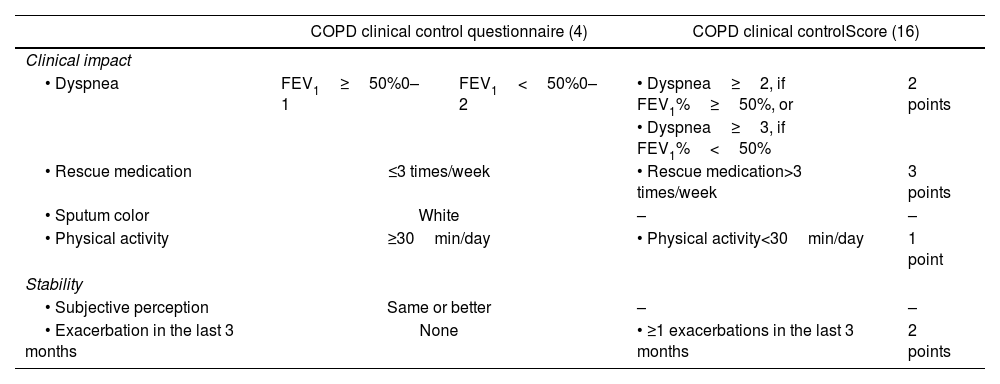
Table 1. COPD clinical control questionnaire (CCQ) and COPD clinical control score (CCS) criteria.
Tables
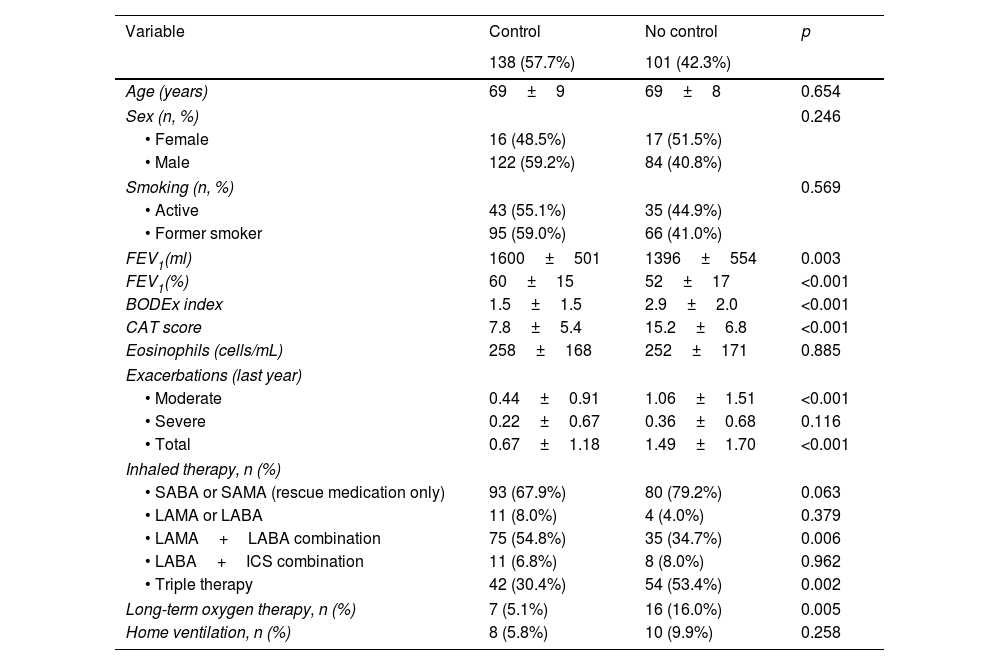
Table 2. Baseline characteristics of the three groups according to the COPD Clinical Control Questionnaire.
Tables
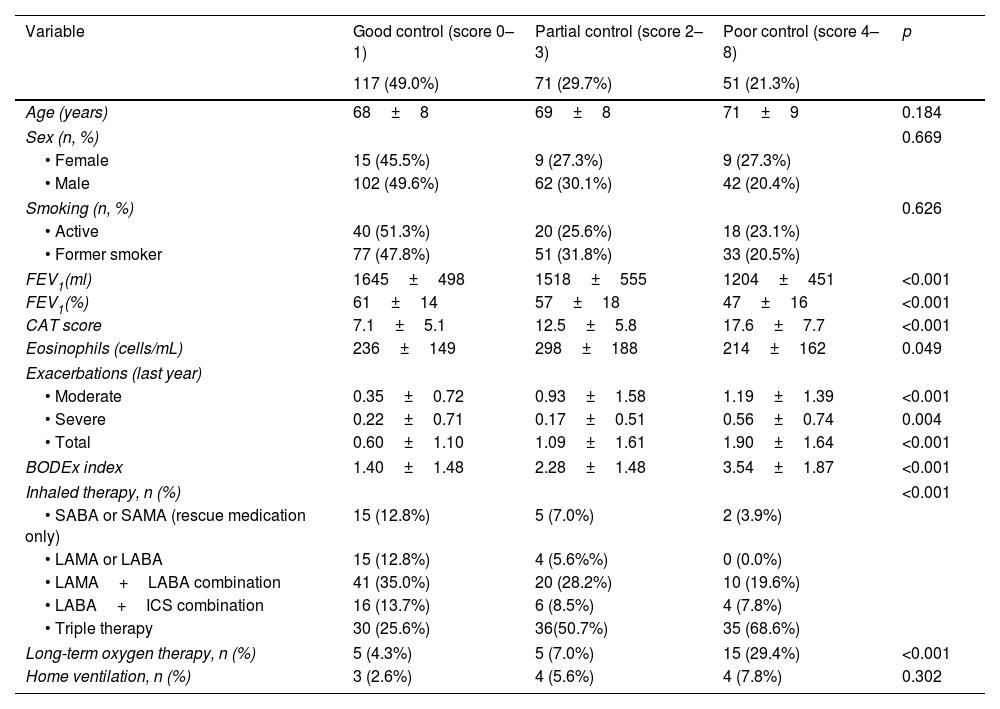
Table 3. Baseline characteristics of the three groups according to the adjusted CCS.
Tables
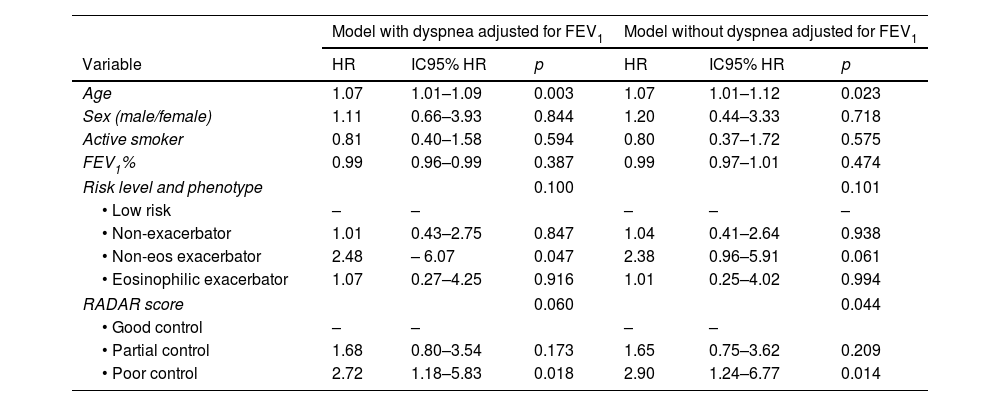
Table 4. Predictive Capacity of Risk of the COPD Clinical Control Score: Multivariate Analysis.
Tables
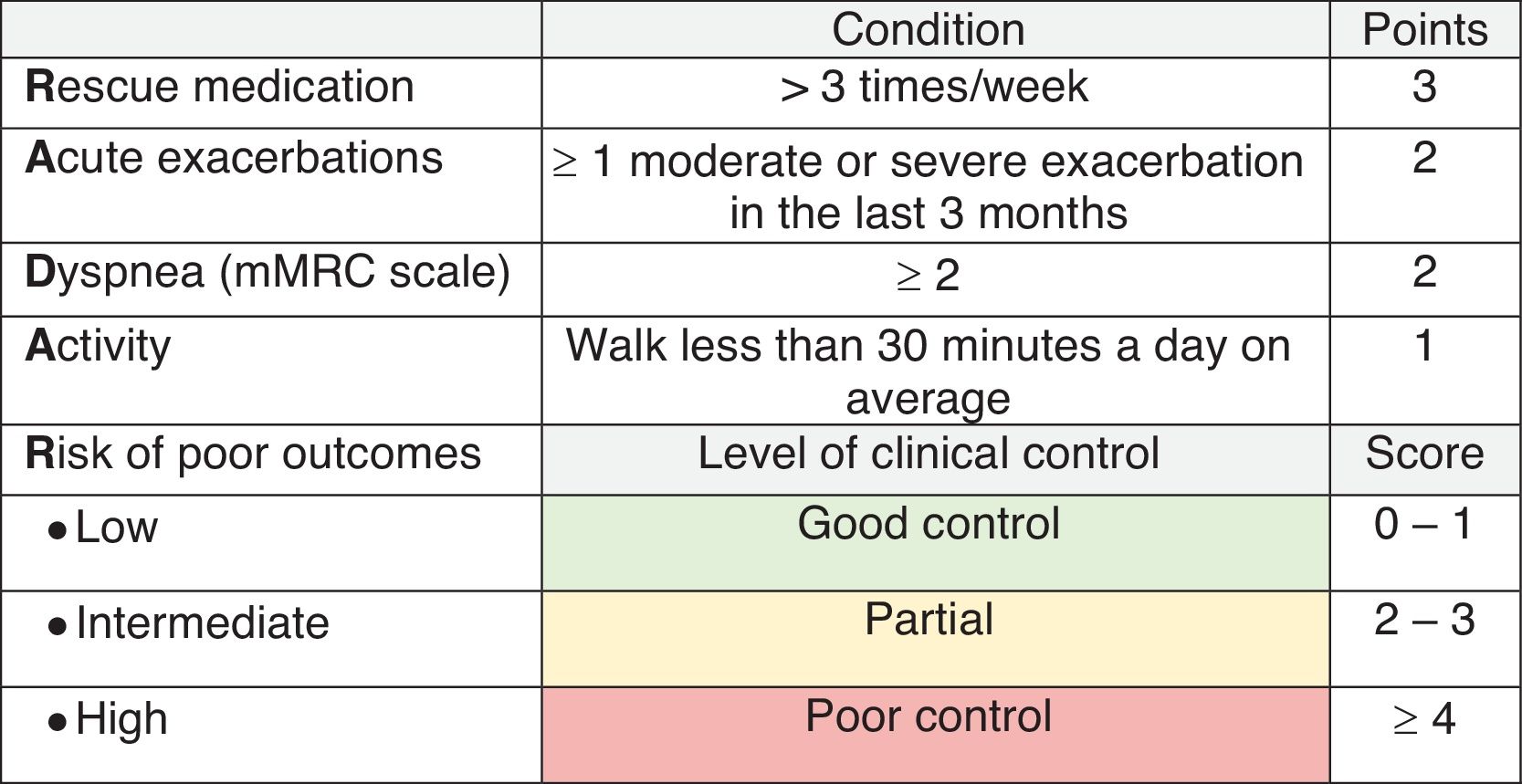
Table 5. The RADAR score. Quantitative assessment of clinical control.
Tables
Show moreShow less
Additional material (2)
Abstract
Objective

Clinical control has been proposed as a composite endpoint in chronic obstructive pulmonary disease (COPD), assessable through the COPD Clinical Control Questionnaire (CCOq). A new score, derived from the CCOq, and termed as RADAR (Rescue medication, Acute exacerbations, Dyspnea, physical Activity, and Risk) has been developed. This study aimed to validate the RADAR score by analyzing its predictive value for future risk and health status.

Methods

A 12-month prospective observational study was conducted in stable COPD patients. Clinical control was assessed at 3 months using both the CCOq and the RADAR score (range 0–8). Dyspnea was evaluated both adjusted and unadjusted for FEV1%. The primary outcome was time to the first composite event (emergency visit, COPD hospitalization, or all-cause mortality); the secondary outcome was the COPD Assessment Test (CAT) score at 12 months.

Results

Of 265 patients enrolled (16.2% women; mean age: 68±9 years; FEV1%: 58±17), 239 completed the 3-month assessment. Among patients with RADAR scores of 0–1, 96.5% met CCOq control criteria, whereas none with scores ≥4 were classified as controlled. Patients were categorized as good (0–1), partial (2–3), or poor control (≥4). Time to composite event differed significantly across groups (p<0.001), with RADAR remaining an independent predictor after adjustment. Predictive accuracy (C-statistic) was 0.697 (adjusted) and 0.713 (unadjusted).

Conclusion

The RADAR score effectively predicts clinical risk and health status, offering a practical tool for monitoring COPD and guiding clinical decisions.


Keywords:
COPD
Control
Score
Exacerbations
Mortality
Monitoring
Graphical abstract

Article

These are the options to access the full texts of the publication Archivos de Bronconeumología
Member
If you are a member of SEPAR:
  • Go to >>>SEPAR<<< website and sign in.
Subscriber
Subscriber

If you already have your login data, please click here .

If you have forgotten your password you can you can recover it by clicking here and selecting the option “I have forgotten my password”
Purchase
Purchase article

Purchasing article the PDF version will be downloaded

Purchase now
Contact
Phone for subscriptions and reporting of errors
From Monday to Friday from 9 a.m. to 6 p.m. (GMT + 1) except for the months of July and August which will be from 9 a.m. to 3 p.m.
Calls from Spain
932 415 960
Calls from outside Spain
+34 932 415 960
Email
Archivos de Bronconeumología
Article options
Tools