Pulmonary arterial hypertension (PAH) is progressive disease with significant morbidity and mortality. However, the burden of PAH in Latin American and Caribbean (LAC) countries remains poorly characterized [1]. PAH mortality in LAC differs from patterns observed in high-income regions and is influenced by limited healthcare access, a shortage of specialized PAH centers, constrained treatment availability, and the regional prevalence of schistosomiasis- and congenital heart disease-associated PAH [2,3]. Existing PAH studies from LAC are typically small and often underrepresented in high-impact journals, further obscuring the regional epidemiologic landscape [4].
This study aims to evaluate trends in PAH (group 1 pulmonary hypertension) mortality in LAC from 1980 to 2021, using data from the Global Burden of Diseases (GBD) study [5] and to project trends from 2021 to 2030.
Data were extracted from the 2021 GBD study, which uses a standardized framework and integrates multiple sources, registrations, hospital and claims datasets, surveys, and disease registries, harmonized for differences in diagnostic practices.
Cause-specific mortality is estimated using CODEm, an ensemble of Bayesian and frequentist models. Consistency across epidemiologic parameters is ensured with DisMod-MR 2.1, a Bayesian meta-regression tool designed to stabilize estimates in data-sparse settings. The GBD framework evaluates data quality by assessing completeness of registration systems and reallocating ill-defined codes, and its uncertainty intervals reflect variability from sampling, model selection, and missing data, which explains why GBD estimates may differ from registry-based cohorts.
For PAH, records were mapped using ICD-9 code 416.0 and ICD-10 code I27.0, which are specific to PAH. With later ICD-10 revisions, some deaths were coded to I27.2; these non-specific codes are redistributed to reduce misclassification. PAH epidemiologic inputs had approximately 70% of cases confirmed by right-heart catheterization and the remainder identified by echocardiography [5].
We analyzed age-standardized mortality rates (ASMR) per 100,000 population, as well as annual percentage change (APC) and average annual percentage change (AAPC), to characterize PAH mortality trends in LAC from 1980 to 2021 among individuals aged 15 years and older across five regions derived from the GBD regional classification system (Andean, Tropical, Southern, Caribbean, and Central Latin America).
Descriptive statistics were used to assess LAC regional mortality trends. A segmented (Joinpoint) regression analysis was conducted to assess PAH mortality AAPC between 1980 and 2021 [6]. A Bayesian age-period-cohort analysis (BAPC) with integrated nested Laplace approximations was employed to project future ASMR for PAH from 2021 to 2030 [7].
Data were stratified by sex and regions to evaluate disparities and particular trends over time. Statistical analyses were performed using RStudio (R version 4.3.1) INLA packages and the National Cancer Institute's Joinpoint Regression Program, version 5.0.2 [6]. p-Value <0.05 was considered statistically significant.
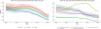
From 1980 to 2021, the estimated number of deaths in LAC attributed to PAH was 39,745. Of these, males constituted 35.8% (n=14,243) and females 64.2% (n=25,501). The overall ASMR was 0.29 (95% CI: 0.27–0.31). ASMR for females was higher at 0.32 (95% CI: 0.29–0.34) compared to males at 0.24 (95% CI: 0.21–0.26) (Fig. 1A).

(A) Age-standardized mortality rates for pulmonary arterial hypertension from 1980 to 2021, combining all five Latin America and Caribbean regions, stratified by sex (both sexes, male, and female). The shaded areas represent the 95% confidence intervals. (B) Age-standardized mortality rates for pulmonary arterial hypertension from 1980 to 2021 in the five Latin America and Caribbean regions for both sexes. The shaded areas represent the 95% confidence intervals.
Tropical Latin America (LA), which includes Brazil and Paraguay, experienced disproportionately higher mortality rates, with an ASMR 1.6-fold higher (0.41, 95% CI: 0.38–0.44) than the other regions combined (0.25, 95% CI: 0.21–0.30). This disparity is especially notable among females, with an ASMR 1.3-fold higher (0.47, 95% CI: 0.44–0.50) compared to males in the same region (0.35, 95% CI: 0.32–0.37). Conversely, Central LA has consistently shown lower mortality rates since 1980. Further details can be found in Fig. 1B and Table 1.
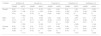
Average age-standardized mortality rates (ASMRs) and average annual percent changes (AAPCs) in pulmonary arterial hypertension (PAH) mortality rates by sex and Latin American and Caribbean regions, 1980–2021.
| Variable | Andean LA | Central LA | Tropical LA | Southern LA | Caribbean LA | |||||
|---|---|---|---|---|---|---|---|---|---|---|
| ASMR | AAPC | ASMR | AAPC | ASMR | AAPC | ASMR | AAPC | ASMR | AAPC | |
| Overall | 0.25 (0.20–0.31) | −1.41 (−1.68 to −1.22) | 0.14 (0.12–0.16) | −2.18 (−2.55 to −1.80) | 0.41 (0.38–0.44) | 0.42 (0.01–0.85)* | 0.31 (0.28–0.33) | −1.81 (−2.01 to −1.62) | 0.31 (0.22–0.40) | −2.05 (−2.26 to −1.81) |
| Male Sex | 0.21 (0.17–0.26) | −1.73 (−1.91 to −1.55) | 0.12 (0.11–0.14) | −2.89 (−3.36 to −2.42) | 0.35 (0.32–0.37) | −0.06 (−0.51 to 0.37)* | 0.25 (0.23–0.28) | −2.50 (−2.71 to −2.28) | 0.31 (0.22–0.41) | −1.89 (−2.14 to −1.64) |
| Female Sex | 0.28 (0.20–0.38) | −1.33 (−1.56 to −1.11) | 0.16 (0.13–0.19) | −2.15 (−2.48 to −1.83) | 0.47 (0.44–0.50) | 0.39 (−0.07 to 0.85)* | 0.36 (0.33–0.41) | −1.51 (−1.71 to −1.31) | 0.30 (0.21–0.45) | −2.25 (−2.40 to −2.04) |
ASMR: age-standardized mortality rates; AAPC: average annual percent change; LA: Latin America. ASMR is reported per 100,000 (95% uncertainty interval, UI); AAPC in ASMR (95% confidence interval, CI), %. The 2021 Global Burden of Diseases, Injuries, and Risk Factors Study divides Latin America into five regions: Central Latin America (Mexico, Guatemala, Honduras, El Salvador, Nicaragua, Costa Rica, Panama, Colombia, and Venezuela); Caribbean Latin America (Antigua and Barbuda, Bahamas, Barbados, Belize, Bermuda, Cuba, Dominica, Dominican Republic, Grenada, Guyana, Haiti, Jamaica, Puerto Rico, Saint Kitts and Nevis, Saint Lucia, Saint Vincent and the Grenadines, Suriname, Trinidad and Tobago, and the US Virgin Islands); Tropical Latin America (Brazil and Paraguay); Andean Latin America (Bolivia, Ecuador, and Peru); and Southern Latin America (Chile, Argentina, and Uruguay).
Segmented Joinpoint analysis revealed distinct temporal patterns in PAH mortality. Across the entire 1980–2021 period, the overall AAPC for both sexes combined was −0.92% (95% CI: −1.25 to −0.58), reflecting the net long-term trend. However, APC estimates demonstrated two distinct phases: a modest increase from 1980 to 2008 (APC: +0.28%) followed by decline from 2008 to 2021 (APC: −3.88%).
Among females, the overall AAPC was −0.97% (95% CI: −1.33 to −0.61). Segment-specific APCs showed an initial rise between 1980 and 2008 (APC: +0.42%) and a subsequent decline from 2008 to 2021 (APC: −3.68%).
Among males, the AAPC was −1.41% (95% CI: −1.75 to −1.06). In contrast to females, males exhibited a slight decrease during 1980–2009 (APC: −0.19%) followed by a sharper decline from 2009 to 2021 (APC: −4.51%).
In Tropical Latin America, mortality rose substantially from 1980 to 2008 (APC: +1.93%) before declining between 2008 and 2021 (APC: −4.28%). Despite this reversal, the ASMR in 2021 remained comparable to levels observed in the early 1980s (Table 1).
The BAPC model predicts in 2030 an ASMR of 0.12 (95% CI: −0.01 to 0.24) for males, 0.19 (95% CI: 0.06–0.32) for females, and 0.16 (95% CI: 0.03–0.29) for both sexes combined; the wide confidence intervals reflect moderate uncertainty and the inherent imprecision of projections beyond the observed data period.
Mortality from PAH demonstrates substantial variation across LAC, influenced by regional socioeconomic disparities, sex differences and evolving healthcare access from 1980 to 2021 [2,4,8]. Although ASMRs have declined overall since 2008, the burden remains disproportionately higher in females and in Tropical Latin America; patterns that persist in projections through 2030. Female-predominant mortality in LAC parallels global PAH patterns, but the mechanisms underlying this disparity in the region remain unclear [9,10].
In comparison, the ASMR in the United States remained stable during the same period, ranging from 0.36 to 0.40 for women and 0.21 to 0.25 for men. While gender disparities in PAH mortality are similar, ASMRs in the US were slightly higher compared to LAC [5]. Conversely, a study based on the CDC WONDER database (2003–2020), which captures the impact of modern era PAH therapies, showed a flat trend in AAPC for male ASMR but a significant decrease of −6.2 for female ASMR [11].
As of 2022, access to advanced PAH therapies in LAC remains severely limited. Selexipag is still unavailable or not reimbursed in countries such as Brazil and Colombia, and Brazil continues to lack parenteral prostacyclin therapy [12]. Even in settings where these agents are technically approved, fragmented coverage and prohibitive out-of-pocket costs restrict real-world use. Another important consideration is that most PAH drug-approval trials were conducted in developed countries, leaving LAC populations markedly underrepresented.
Moreover, most clinical studies exclude schistosomiasis-associated PAH, a subtype that occurs predominantly in Brazil and may account for up to 20% of cases in endemic regions. Because the GBD framework does not differentiate PAH subtypes, the specific contribution of schistosomiasis cannot be quantified, limiting the ability to contextualize regional mortality patterns [2,13,14].
Taken together, these region-specific factors contribute to suboptimal adherence to guideline-directed PAH care in LAC. A recent cross-sectional survey across Argentina, Brazil, Colombia, and Mexico found that only 28% of patients received simplified risk assessments and just 10% underwent right-heart catheterization within the prior year. Physician affiliation with specialized PAH centers was also limited, ranging from 18% in Brazil to 71% in Argentina [8].
The major strength of this work is the use of a harmonized, country-level analytic framework that enables consistent comparison of PAH mortality trends across regions and over time. However, this study has several limitations. The completeness and quality of PAH-related GBD data likely vary across LAC, and the unobservable degree of imputation may affect the precision of mortality estimates and contribute to regional heterogeneity. Additional limitations include potential misclassification of cases, underreporting, and the lack of granularity regarding PAH subtypes or disease severity. Notably, the findings do not apply to PH groups 2–5. Also, while ASMR is useful for comparing mortality across regions, it does not capture multifaceted factors that influence overall PAH mortality.
Despite challenges in LAC healthcare, the overall decline in ASMR, both historical and projected, is an encouraging trend. This reduction may stem from increased awareness among healthcare providers and the public, leading to earlier diagnoses and interventions [4]. Increased access to echocardiography and cardiac catheterization has also improved early detection of PAH in low- and middle-income countries [15]. Expanded risk assessment and pharmacological options may have contributed to reduced mortality in LAC, although access remains limited [16].
Given the structural constraints of LAC health systems, actionable steps are essential [17]. First, countries could adopt PAH pathways that standardize detection, referral, and treatment initiation within resource-limited environments. This includes incorporating simple screening tools (e.g., echocardiography-based algorithms), standardized risk stratification and clear referral criteria for specialized centers.
Second, the development or expansion of national registries would improve surveillance, enable benchmarking and support more accurate estimates of disease burden. Third, focused specialist training for non-PH specialists may mitigate the shortage of dedicated PAH centers by improving diagnosis and appropriate triage.
Access to advanced therapies remains a major barrier across LAC. Incorporating medications such as parenteral prostacyclins into national essential medicines lists and negotiating region-wide procurement agreements may improve affordability. Strengthening insurance coverage and reducing out-of-pocket costs are also critical to ensure real-world use of guideline-directed therapies.
Collectively, these initial steps can bring PAH care in LAC closer to guideline-level practice, helping reduce preventable deaths and promote more equitable outcomes across Latin America and the Caribbean.
CRediT authorship contribution statementMVFG: Conceptualization; Data acquisition, analysis, and interpretation; Writing – original draft; Writing – review and editing; Final approval; Accountability for all aspects of the work. EFP: Conceptualization; Data interpretation; Writing – review and editing; Final approval; Accountability for all aspects of the work.
Declaration of generative AI and AI-assisted technologies in the writing processNo generative AI was used in the preparation of this manuscript.
FundingThis research did not receive any specific grant from funding agencies in the public, commercial, or not-for-profit sectors.
Conflict of interestThe authors declare no conflicts of interest that could have influenced the content of this manuscript.