
Respiratory Intermediate Care Units (RICUs) are specialized units between conventional hospitalization and intensive care units (ICU), designed to manage patients with acute respiratory failure who require advanced respiratory support and monitoring, but do not necessarily require invasive mechanical ventilation (IMV).
ObjectiveTo describe the clinical outcomes, safety indicators, and estimated financial impact and resource utilization of a RICU over a 20-year period.
MethodsRetrospective study (2003–2023) of all patients admitted to the RICU of a tertiary level hospital in Spain between January 2003 and December 2023. Analysed activities include: non-invasive mechanical ventilation (NIMV), high-flow oxygen therapy (HFOT), weaning from IMV, and interventional procedures. Primary outcomes included mortality, intubation rate, and length of stay (LOS). Financial impact was estimated by comparing the observed RICU costs with a theoretical ICU scenario.
ResultsSeven thousand six hundred fifty-four patients were included (mean age 67±14 years, 62% male). The main diagnoses were: COVID-19 pneumonia (30.6%), chronic obstructive pulmonary disease exacerbation (28.7%), and severe pneumonia (22.2%). Additionally, 18.3% were IMV weaning admissions. Overall mortality was 8.4%, and the intubation rate was 12.1%. Among the patients admitted for weaning, survival reached 91.8%. The mean LOS was 6.9 days. Financial impact assessment estimated an average daily cost of €587 for RICU care compared with €940 for the theoretical ICU scenario, corresponding to an estimated annual difference of €485,000.
ConclusionsOver a 20-year period, this RICU provided specialized care for a large cohort of patients with acute respiratory failure, achieving favourable clinical outcomes with a lower estimated resource utilisation and costs.
Respiratory Intermediate Care Units (RICUs) have emerged as an intermediate level of care between conventional hospitalization and intensive care units (ICU) [1,2]. These units are designed to manage patients with acute respiratory failure who require close monitoring and advanced respiratory support, such as non-invasive mechanical ventilation (NIMV) or high-flow oxygen therapy (HFOT), but do not necessarily require invasive mechanical ventilation (IMV) or ICU admission [3].
In Spain, several RICUs have been established within pulmonology departments [4]. Previous studies have suggested that RICUs may improve hospital efficiency by reducing ICU admissions and optimizing resource allocation [5,6]. During the COVID-19 pandemic, RICUs played a relevant role in managing large numbers of patients with respiratory failure and preventing health system collapse, with Spanish multicenter studies reporting 75–88% survival rates [7–9].
The objective of this study was to characterize the clinical outcomes, safety indicators, and estimated financial impact and resource utilization of a RICU over two decades of clinical practice, encompassing NIMV, HFOT, weaning from IMV, and interventional procedures.
Materials and methodsStudy designThis retrospective, single-center observational study was conducted in the RICU of a tertiary hospital in Madrid from January 2003 to December 2023. The RICU consists of 8 beds, specialized nurse respiratory care, and continuous monitoring and medical coverage. It is staffed by a multidisciplinary team including pulmonologists, physiotherapists, and collaborating specialists such as nutritionists and psychologists.
Study populationAll consecutive adult patients admitted to the RICU in the studied period were included in the study. As this was a retrospective observational analysis of routine clinical practice, no additional inclusion or exclusion criteria were applied for study participation.
During the study period, admission to the RICU was determined according to institutional clinical protocols and physician judgement. In general, patients admitted to the unit required advanced respiratory monitoring and/or specialized respiratory support, including NIMV, HFOT, or weaning from IMV.
Data collectionClinical data were obtained retrospectively from the hospital electronic medical record system. Variables collected included demographic characteristics, comorbidities, admission source, primary diagnosis, respiratory therapies administered, length of stay (LOS) in RICU, need for intubation, and mortality. Gasometrical parameters at admission were also recorded. Missing data were minimal and handled using complete-case analysis.
Operational definitionsRICU failure was defined as an endotracheal intubation or ICU transfer due to clinical deterioration requiring a higher level of care than provided in the RICU. However, ICU referral criteria were not prospectively standardized or systematically recorded throughout the 20-year study period.
RICU discharge was based on sufficient reduction in respiratory support requirements to allow transfer to a conventional ward, home, or another appropriate care setting.
OutcomesThe primary outcomes were: overall RICU mortality, RICU failure and RICU length of stay (LOS).
The secondary outcomes included the recorded success rate of specific respiratory therapies, procedure-related complications, and RICU readmissions.
The economic implications of RICU activity were studied as a secondary exploratory analysis. An internally derived risk-stratification model was developed using logistic regression in patients admitted between 2003 and 2018 and temporally evaluated in a separate cohort admitted between 2019 and 2023. The model incorporated selected demographic, clinical and physiological variables routinely available at admission.
Statistical analysisCategorical variables were expressed as absolute frequencies and percentages with 95% confidence intervals (95% CI). Quantitative variables were evaluated using the Kolmogorov–Smirnov test, with results expressed as mean±standard deviation (SD) for normal distributions or median and interquartile range (IQR) for nonparametric distributions. For bivariate analysis, the chi-square test was used for categorical variables, and the t-test or the Mann–Whitney U test for quantitative variables. Multiple logistic regression models were constructed to identify independent predictors of mortality. Survival analysis was performed using the Kaplan–Meier method with the log-rank test for comparisons. Statistical power was >90% to detect clinically relevant differences (d≥0.5). Model diagnostics for logistic regression included the Hosmer–Lemeshow goodness-of-fit test (χ2=8.34, df=8, p=0.401), area under the receiver operating characteristic curve (AUC=0.89, 95% CI 0.87–0.91), and calibration assessment. Early support initiation (<2h) was defined as the time from RICU admission to the first application of non-invasive respiratory support, as documented on timestamped electronic medical records. Statistical analyses were performed using SPSS 29.0 and R 4.3.2.
Financial impact and resource utilization assessmentA financial impact and resource utilization assessment was performed from the public health system perspective, including direct medical costs. Costs were updated to 2023 in euros using previously published data from the same institution [10]. Personnel costs included the incorporation of a new attending physician (€60,000/year since 2021) and the implementation of on-call duties (€300/weekday, €500/holiday since 2021). Daily operational costs were estimated for the RICU and compared with a theoretical ICU scenario, in which patients requiring advanced respiratory support and continuous monitoring would have otherwise been admitted to the ICU. The analysis was intended to estimate the potential financial impact and differences in resource utilization associated with the RICU model. Cost comparisons were expressed as average daily costs and absolute and relative differences between the two care settings.
Ethical considerationsThis study was conducted in accordance with the Declaration of Helsinki and national regulations regarding clinical research. The study used anonymized retrospective clinical data obtained from routine medical care; individual informed consent was waived by the institution's ethics committee (registration number: EO220-25_FJD), in accordance with Spanish legislation. All data were anonymized prior to analysis and handled in compliance with the General Data Protection Regulation.
ResultsDuring the study period, 7654 patients were admitted to the RICU and included in the analysis. The mean age of the study population was 67±14 years, and 62% of patients were male. The comorbidity burden was substantial, with a mean Charlson comorbidity index of 4.1±2.8. A total of 45% of patients were admitted from the emergency department; 32% were transferred from hospital wards; 18% arrived from the ICU for step-down care or weaning; and 5% arrived from other sources, including external transfers. Severity at admission, assessed by the SAPS II score, averaged 57.8±14.9 points. Demographic characteristics are presented in the supplementary material as Table S1.
The main diagnoses among patients admitted to the RICU were: COVID-19 pneumonia: 2342 patients (30.6%), chronic obstructive respiratory disease (COPD): 2200 patients (28.7%), severe pneumonia: 1700 patients (22.2%), other respiratory conditions including postoperative respiratory failure, neuromuscular disease, pulmonary embolism and acute respiratory distress syndrome (ARDS): 1412 patients (18.5%). In addition, 1400 patients (18.3%) were admitted primarily for weaning from IMV. The distribution of diagnoses by period is detailed in Table S2 in the supplementary material.
NIMV was used in 5877 patients (76.8%), and HFOT was administered to 3982 patients (52.0%) as the main non-invasive therapies, and 2295 (30.0%) had complementary interventional procedures.
Overall mortality during RICU admission was 8.4%, with 644 deaths among 7654 admissions. The intubation rate or transfer to ICU was 12.1%. Follow-up was 100% complete to the primary outcome (RICU discharge/death), with the non-weaning admissions (n=6254; 81.7%) having a LOS of 6.9±3.3 days. Patients admitted for weaning from IMV represented a characteristic subgroup with longer stays and a more complex clinical management. Among the weaning group, survival reached 91.8%, with a median weaning duration of 28 days (IQR: 18–45).
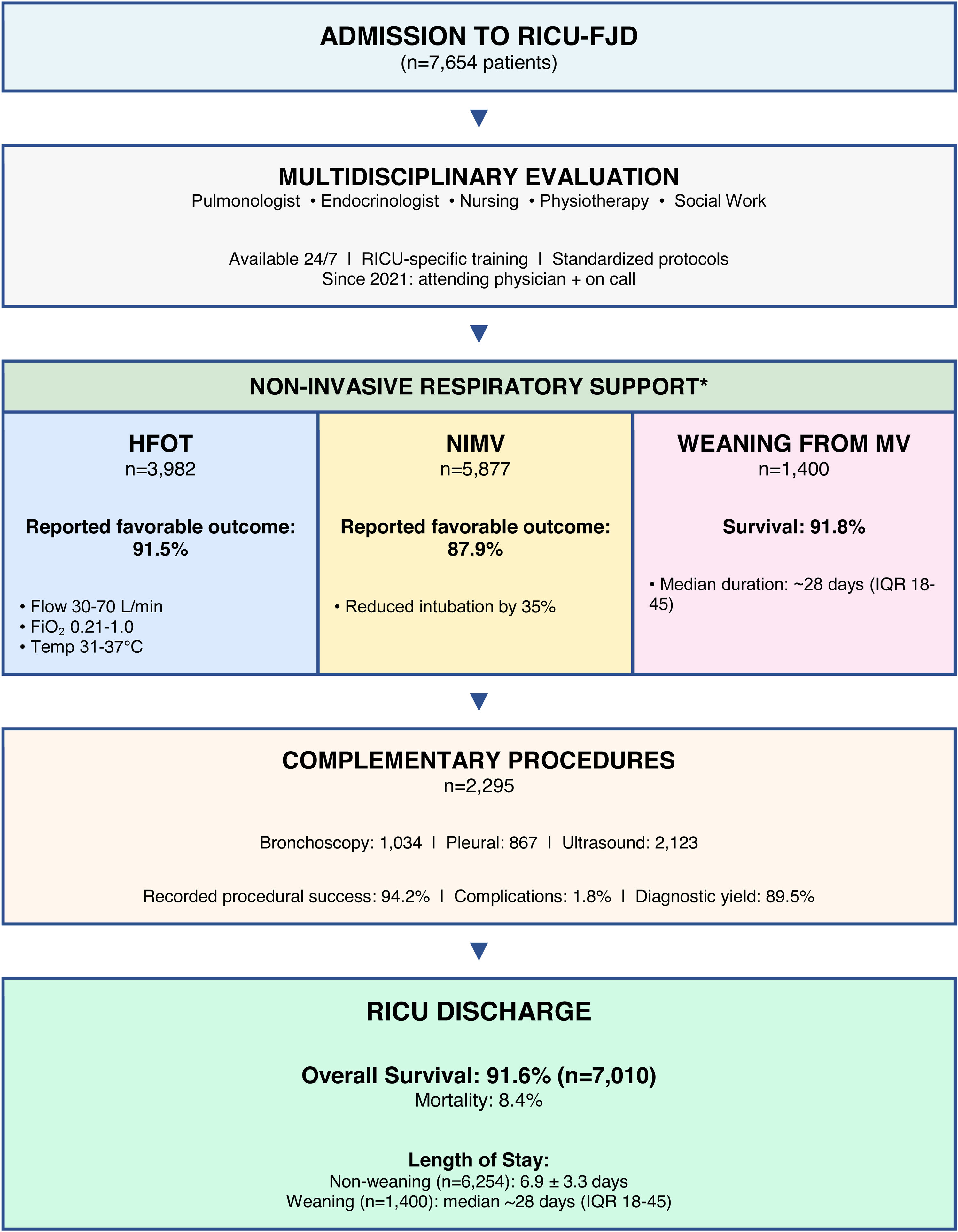
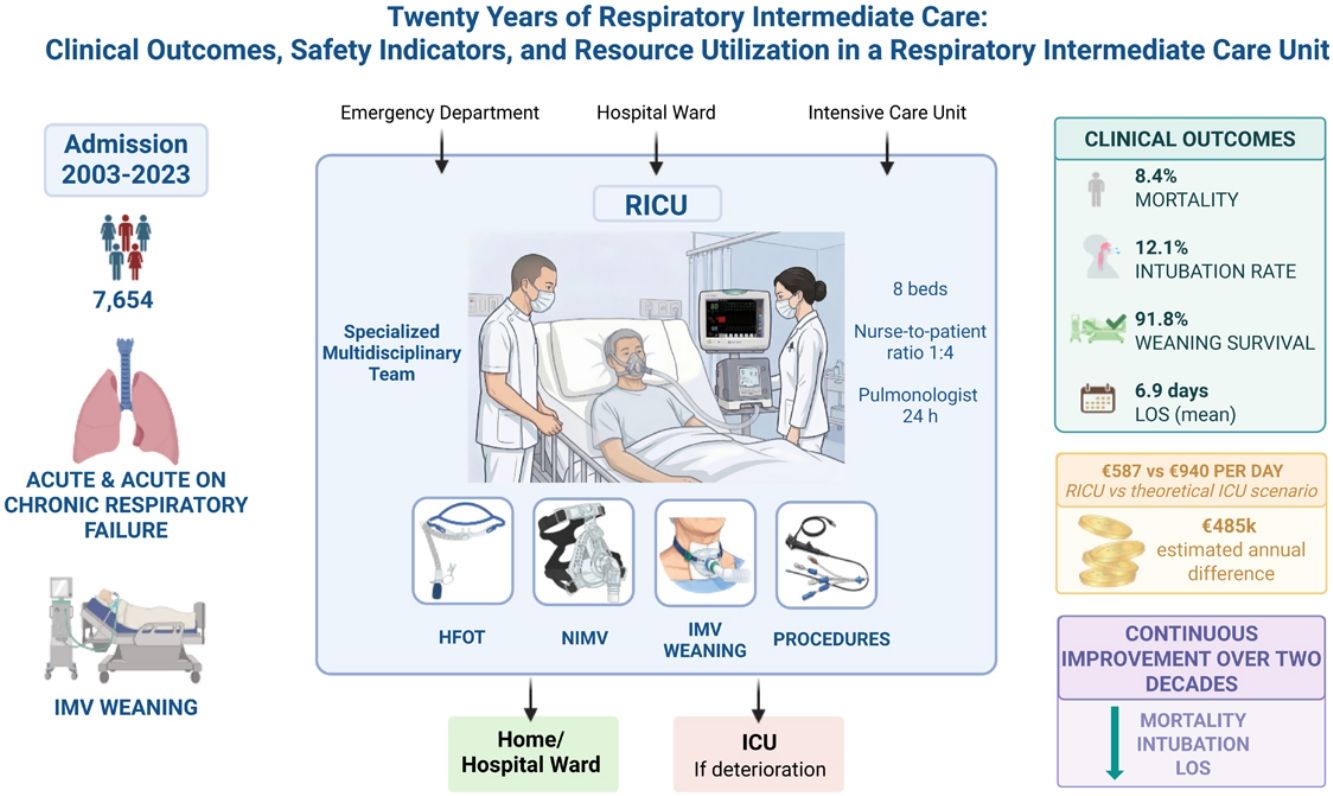
We have summarized all these results in Fig. 1.
Complete RICU-FJD management algorithm. Flow diagram illustrating the comprehensive management pathway for all 7654 patients admitted to the Respiratory Intermediate Care Unit of Hospital Universitario Fundación Jiménez Díaz from January 2003 to December 2023. The algorithm shows the multidisciplinary evaluation process, systematic risk stratification, and distribution across therapeutic modalities, including high-flow oxygen therapy (HFOT), non-invasive mechanical ventilation (NIMV), mechanical ventilation weaning, and complementary interventional procedures. Key performance indicators demonstrate an overall mortality of 8.4%, with 100% complete follow-up to hospital discharge. Numbers represent actual patient volumes and recorded outcomes for each therapeutic pathway. Definitions of treatment response or success were not prospectively standardized throughout the study period. *Categories not mutually exclusive; patients may receive multiple therapies.
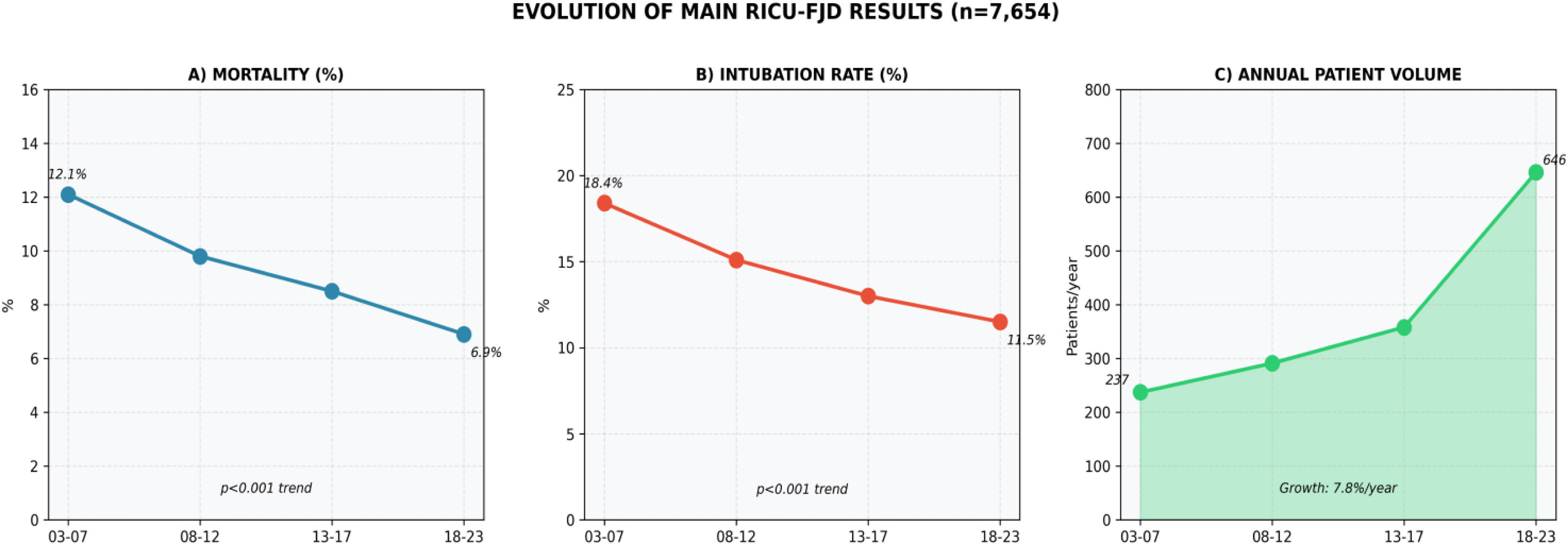
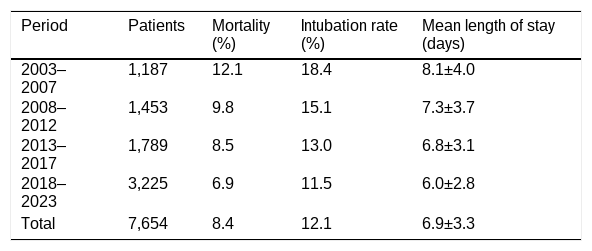
Clinical outcomes varied over the study period, with mortality decreasing from 12.1% in 2003–2007 to 6.9% in 2018–2023. Similarly, intubation rates declined from 18.4% to 11.5%, while mean LOS decreased from 8.1 to 6.0 days. These temporal changes, summarized in Table 1 and illustrated in Fig. 2, were statistically significant (p<0.001 for all comparisons).
Temporal trends of main results.
| Period | Patients | Mortality(%) | Intubation rate(%) | Mean length of stay(days) |
|---|---|---|---|---|
| 2003–2007 | 1,187 | 12.1 | 18.4 | 8.1±4.0 |
| 2008–2012 | 1,453 | 9.8 | 15.1 | 7.3±3.7 |
| 2013–2017 | 1,789 | 8.5 | 13.0 | 6.8±3.1 |
| 2018–2023 | 3,225 | 6.9 | 11.5 | 6.0±2.8 |
| Total | 7,654 | 8.4 | 12.1 | 6.9±3.3 |
Outcomes over four consecutive 5-year periods (2003–2023) in a cohort of 7654 patients treated in the Respiratory Intermediate Care Unit (RICU). Mortality, intubation rate, and mean length of stay all showed statistically significant downward trends (p<0.001 for all). The average length of stay decreased from 8.1 to 6.0 days, with concomitant reductions in both mortality and intubation rates, highlighting continuous optimization of care protocols. p<0.001 for temporal trend in all variables.
Temporal evolution of clinical indicators (2003–2023). Three-panel temporal analysis showing changes in key clinical indicators over 20 years of RICU operation. Panel A: Hospital mortality declined from 12.1% (2003–2007) to 6.9% (2018–2023), representing a 43% relative improvement (p<0.001 for trend). Panel B: Intubation rate decreased from 18.4% to 11.5% over the same period (p<0.001 for trend). Panel C: Annual patient volume increased from 237 to 538 patients per year (average), representing a 127% increase over the study period. Timeline includes major milestones: RICU opening (2003), standardized NIMV protocols (2008), HFOT implementation (2018), personalized protocols (2010), ISO 9001 certification (2018), COVID-19 protocols (2020), specialized attending physician and 24/7 on-call system (2021), and excellence model consolidation (2023).
Key findings:
- •
Mortality decreased from 12.1% (2003–2007) to 6.9% (2018–2023), p<0.001
- •
Intubation rate decreased from 18.4% to 11.5%, p<0.001
- •
Annual patient volume more than doubled (237–538patients/year)
Note: Trends analyzed using Cochran–Armitage test for proportions and linear regression for volume.
Important milestones: 2003: RICU opening – project initiation. 2008: Implementation of standardized NIMV protocols. 2009: Incorporation of thoracic ultrasound. 2010: Development of personalized protocols. 2018: Incorporation of HFOT. 2020: COVID-19 protocol. 2021: Addition of third specialized attending physician+24/7 on-call. 2023: Consolidation of excellence model.
The COVID-19 pandemic represented the most demanding period in the unit's history, with 2342 patients treated between March 2020 and December 2023, as presented in Table S2 in the supplementary material. During peak pandemic periods, the unit's capacity expanded from 8 to 34 beds while maintaining 5 beds for non-COVID pathology. Despite the workload, overall survival reached 88.1%, with an intubation rate of 11.9% and a mean LOS of 8.6±5.1 days; mortality was highest during 2020.
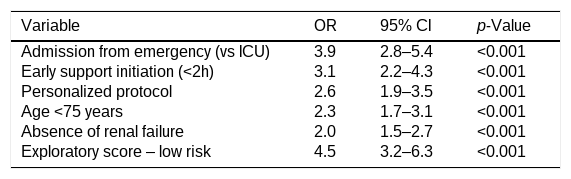
Predictors of survivalA multivariate logistic regression analysis identified six independent variables associated with survival (Table 2). Admission from the emergency department rather than the ICU emerged as the strongest protective factor (OR 3.9, 95% CI 2.8–5.4), followed by initiation of non-invasive respiratory support within 2h (OR 3.1, 95% CI 2.2–4.3). Other variables associated with survival included local treatment protocols (OR 2.6, 95% CI 1.9–3.5), age under 75 years (OR 2.3, 95% CI 1.7–3.1), normal renal function (OR 2.0, 95% CI 1.5–2.7), and classification as low-risk by our predictive scoring system (OR 4.5, 95% CI 3.2–6.3).
Independent predictors of survival (n=7654).
| Variable | OR | 95% CI | p-Value |
|---|---|---|---|
| Admission from emergency (vs ICU) | 3.9 | 2.8–5.4 | <0.001 |
| Early support initiation (<2h) | 3.1 | 2.2–4.3 | <0.001 |
| Personalized protocol | 2.6 | 1.9–3.5 | <0.001 |
| Age <75 years | 2.3 | 1.7–3.1 | <0.001 |
| Absence of renal failure | 2.0 | 1.5–2.7 | <0.001 |
| Exploratory score – low risk | 4.5 | 3.2–6.3 | <0.001 |
Exploratory analysis of factors associated with survival to RICU discharge (n=7654). Exploratory multivariate logistic analysis of factors associated with survival to RICU discharge. The internally derived score was developed for exploratory risk stratification and was not externally validated. Significant factors include early noninvasive support (<2h, defined as time from RICU admission to first respiratory support), admission from the emergency department, use of personalized protocols, younger age (<75 years), absence of renal failure, and classification as low-risk according to the internally derived exploratory score. Apparent discrimination was assessed using the AUC (0.89, 95% CI 0.87–0.91) with a Nagelkerke R2 of 0.76, Hosmer–Lemeshow p=0.401. Adjusted model R2 Nagelkerke=0.76.
Our scoring system was developed internally using logistic regression to stratify patients into risk categories, only with exploratory purposes and was not externally validated. Apparent discrimination was assessed using the AUC (0.89, 95% CI 0.87–0.91) with a Nagelkerke R2 of 0.76, Hosmer–Lemeshow p=0.401 (Table 2) for period. Detailed information and raw data for logistic regression is presented in the supplementary material as Table S3.
Financial impact and resource utilization assessmentThis analysis assumes that, in the absence of RICU, patients meeting RICU admission criteria would have required ICU management, due to the need for advanced respiratory support and continuous monitoring, which are not routinely available in conventional hospital wards. It should be interpreted as differences in resource utilization and estimated costs under the assumption of the theoretical ICU comparator, and not as a formal cost-effectiveness analysis.
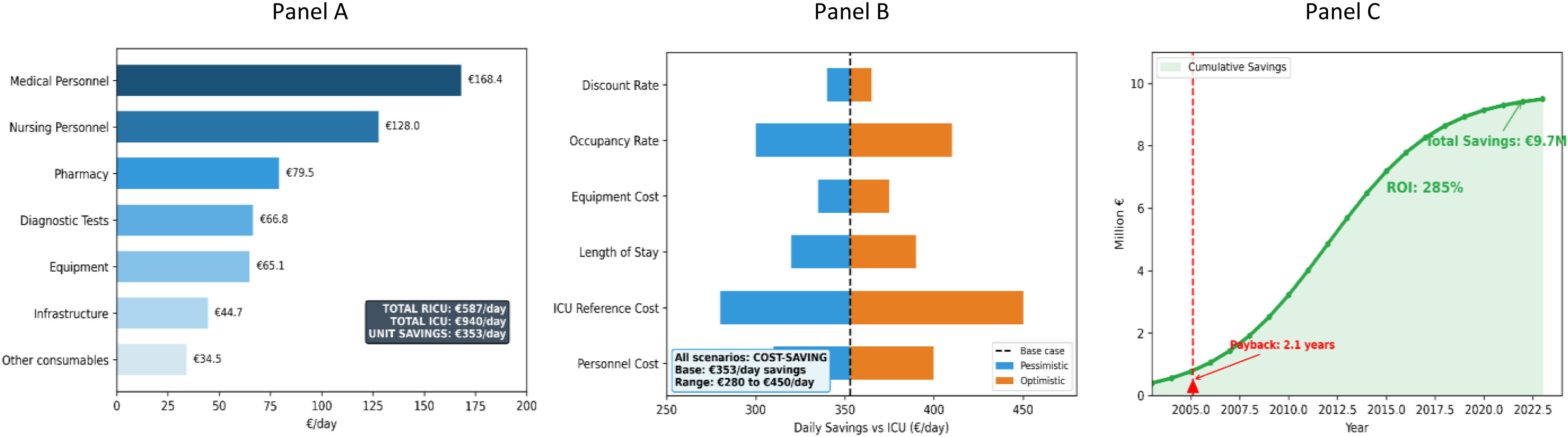
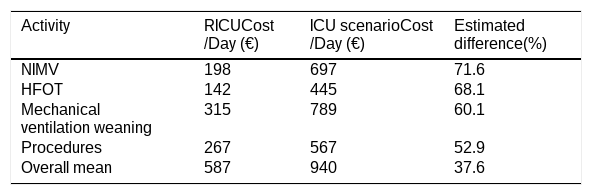
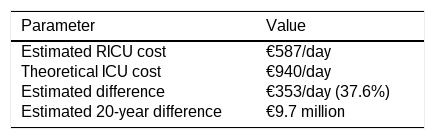
The comprehensive economic analysis built upon our published methodology [10] and updated to 2023 euros, is detailed in Appendix I. The financial evaluation estimated an average cost of €587.20 compared with €940.50 for theoretical ICU scenario resulting in a €353.30 saving per patient-day, representing a 37.6% decrease in costs compared to theoretical ICU management as shown in Fig. 3. Based on the number of patients and activity recorded during the study period, the theoretical annual cost savings associated with RICU activity were €485,000. When analyzed by therapeutic modality, the estimated relative difference compared with the ICU scenario was 71.6% for NIMV, 68.1% for HFOT, 60.1% for IMV weaning, and 52.9% for interventional procedures Table 3 presents the detailed analysis, while Table S4 provides the corresponding cost components.
Estimated financial impact and resource utilization. Estimated financial impact and resource utilization based on observed RICU costs and a theoretical ICU scenario. Panel A: Detailed cost structure breakdown showing daily operational costs of €587 for RICU compared to an estimated difference of €353 per patient-day (37.6%). Major cost components include personnel costs (€341, 58.1% – including base personnel, specialized attending physician since 2021, and 24/7 on-call coverage), supplies (€130, 22.2%), pharmacy (€62, 10.5%), and laboratory/other services (€54, 9.2%), as detailed in Appendix II – Table A4. Panel B: Sensitivity analysis of estimated financial impact. Deterministic sensitivity analysis showed the robustness of the estimated annual financial difference across all the predefined parameter ranges. Panel C: Twenty-year cumulative analysis estimated a €9.7 million difference in costs between the observed RICU activity and the ICU scenario.
Summary of financial results:
Estimated financial impact by RICU activity.
| Activity | RICUCost/Day (€) | ICU scenarioCost/Day (€) | Estimated difference(%) |
|---|---|---|---|
| NIMV | 198 | 697 | 71.6 |
| HFOT | 142 | 445 | 68.1 |
| Mechanical ventilation weaning | 315 | 789 | 60.1 |
| Procedures | 267 | 567 | 52.9 |
| Overall mean | 587 | 940 | 37.6 |
Cost comparison between Respiratory Intermediate Care Unit (RICU) and Intensive Care Unit (ICU) scenario management across various activities. RICU care demonstrated substantial differences ranging from 52.9% to 71.6% depending on the intervention. The average daily cost in RICU (€587) was significantly lower than in the ICU scenario (€940). The economic impact estimated an annual saving of €485,000, with a per-patient saving of €127.
RICU management was associated with lower estimated resource utilization and lower daily costs than the theoretical ICU scenario used for comparison (Fig. 3). Over the 20-year study period, these corresponded to a substantial difference in cumulative estimated costs between the RICU model and the theoretical ICU scenario.
Quality of careAmong non-weaning admissions, which represented the majority of the cohort, the mean LOS was 6.9±3.3 days. Severe adverse events and procedure-related complications were infrequent, occurring in less than 1% of cases.
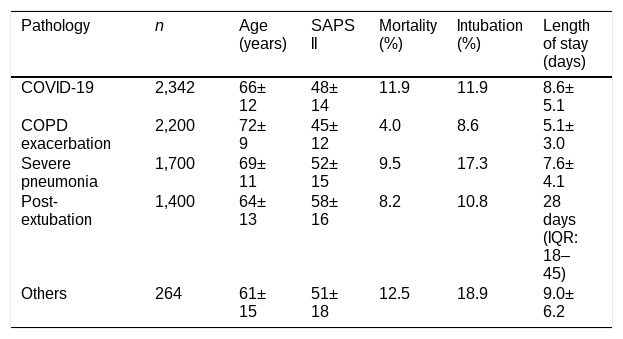
Clinical outcomes varied substantially according to the underlying condition (Table 4). Patients admitted with COPD exacerbations showed the most favorable outcomes, with the lowest mortality rate (4.0%) and the shortest LOS (5.1±3.0 days). In contrast, patients with COVID-19 and severe pneumonia experienced higher mortality rates (11.9% and 9.5%, respectively) and longer hospital stays. Patients admitted for prolonged weaning after IMV had an intermediate mortality rate (8.2%) but required substantially longer admissions (median 28 days, IQR 18–45). Overall, these findings highlight the clinical heterogeneity of the RICU population and the need to interpret global outcome measures within the context of specific admission categories
Results by specific pathology.
| Pathology | n | Age(years) | SAPS II | Mortality(%) | Intubation(%) | Length of stay(days) |
|---|---|---|---|---|---|---|
| COVID-19 | 2,342 | 66±12 | 48±14 | 11.9 | 11.9 | 8.6±5.1 |
| COPD exacerbation | 2,200 | 72±9 | 45±12 | 4.0 | 8.6 | 5.1±3.0 |
| Severe pneumonia | 1,700 | 69±11 | 52±15 | 9.5 | 17.3 | 7.6±4.1 |
| Post-extubation | 1,400 | 64±13 | 58±16 | 8.2 | 10.8 | 28 days (IQR: 18–45) |
| Others | 264 | 61±15 | 51±18 | 12.5 | 18.9 | 9.0±6.2 |
Clinical outcomes stratified by major respiratory pathologies treated in the RICU. COVID-19 and severe pneumonia were associated with higher mortality and longer stays, while COPD exacerbations showed the lowest mortality (4.0%) and shortest stays. Post-extubation patients had prolonged hospitalizations despite relatively low mortality. Note: Post-extubation (n=1400) represents weaning admissions whose underlying diagnoses are captured in the other categories; row totals exceed 7654 due to this overlap, as these patients are analyzed separately given their distinct clinical pathway and outcomes. Statistically significant differences (p<0.001) were observed across all variables, underscoring the heterogeneity of risk and outcomes by clinical condition.
p<0.001 for differences between groups in all variables
This study presents the most comprehensive and prolonged analysis of integral RICU activity published by a Spanish center, showing good results in all activities developed. Table 1 and Fig. 2 document the progressive and sustained improvement across all indicators over the two decades of study, with a mortality reduction from 12.1% to 6.9% between the first and last quinquennium, representing a 43% relative improvement.
This temporal evolution, detailed in Table S1 in the supplementary material, shows consistency in patient demographic characteristics throughout the years, suggesting that improvement may be related to process optimization rather than case-mix changes. The stepwise implementation of technological innovations such as NIMV protocols in 2008, local IMV weaning protocols in 2010, HFOT in 2018, and additional specialized resources in 2021 temporally coincides with the observed improvements in clinical outcomes. However, given the extended observational period, these findings should be interpreted as associations rather than direct causal effects. Multiple unmeasured factors, including advances in treatment, changes in population health, and the evolution of the healthcare system, may have contributed to these trends. The stability of patient demographics and baseline severity over time, nevertheless, supports the hypothesis that internal process optimization within the RICU may have played a relevant role. The sustained growth in patient volume, without deterioration in attention suggests the existence of economies of scale and organizational learning effects.
The 8.4% overall mortality rate represents a remarkable clinical outcome. This finding is consistent with Spanish experiences reporting favorable results in specialized RICUs [7,9,10]. The methodological robustness of our findings is supported by established guidelines for evidence-based medicine [11].
Fig. 1 presents the complete management algorithm that enabled these results, showing the pathway for all 7654 patients with a 100% complete follow-up to discharge from the RICU. The algorithm demonstrates the integration of systematic risk stratification, multidisciplinary evaluation, and distribution across therapeutic modalities. The 12.1% intubation rate achieved through this systematic approach support the organizational and clinical model as an interesting potential replicable framework for other centers.
Among predictors of survival, admission from the emergency department rather than from the ICU was associated with higher odds of survival, likely reflecting differences in baseline clinical trajectories and disease severity rather than a direct protective effect of admission source itself. Patients transferred from the ICU may represent a population with more advanced disease or prior treatment failure, which should be considered when interpreting this finding. Early support initiation (<2h) with an OR of 3.1 confirms the importance of the time factor in acute respiratory failure. Our data documented that 89% of our patients received support in less than 2h, suggesting that process organization and 24/7 availability may be important contributors to favorable outcomes, in line with ERS/ATS recommendations [12,13].
Table 4 reveals differentiated patterns by pathology. The 4.0% mortality rate in COPD exacerbation reflects both the respiratory specialization of the team and optimization of specific protocols developed over two decades. The reduced mean LOS (5.1 days) without increased readmissions may indicate that efficiency does not compromise safety. Results in severe pneumonia (9.5% mortality rate) are particularly relevant, considering this pathology presents greater prognostic heterogeneity and management complexity. Table S1 in the supplementary material shows that our patients had similar SAPS II scores (52±15) to published series, ruling out selection bias as an explanation for better results.
Patients requiring prolonged weaning from IMV represented a complex subgroup within the RICU population. Despite achieving a 91.8% survival rate to RICU discharge, they required longer stays and more intensive multidisciplinary care. Management was guided by a structured protocol (Appendix II), including, in selected cases, the use of a tracheostomy stoma retainer device. Although this approach was previously associated with a 98.5% decannulation success rate [14], the present study was not designed to evaluate the contribution of individual interventions.
The 2342 patients with COVID-19 treated during the pandemic represent a substantial component of this cohort and provide valuable information on the performance of the RICU during a period of exceptional healthcare demand [15]. Table S2 in the supplementary material documents the necessary organizational transformation. The 88.1% survival and 11.9% intubation rates are consistent with other Spanish multicenter experiences [7–9]. The Catalonian study reported similar results in properly organized RICUs [7]. Mortality peaked during the first waves of COVID-19 in 2020 and progressively declined thereafter, coinciding with evolving treatment approaches, greater clinical experience, and changes in the epidemiological characteristics of the disease [16,17].
Because follow-up was limited to the RICU stay, no post-discharge outcomes were available for analysis. Consequently, 30-day or 90-day survival, hospital mortality after RICU discharge, readmissions, and other longer-term clinical outcomes could not be assessed.
HFOT became progressively integrated into routine clinical practice during the study period and represented an important component of respiratory support in patients with acute hypoxemic respiratory failure [18]. However, given the observational nature of the study and the different periods, no direct comparison between these modalities can be made.
Table 3 and Appendix I present the estimated financial impact and resource utilization associated with our RICU activity, following established health economic evaluation principles [19,20] and based on institutional cost estimates. This analysis reveals potential general cost savings [21–23] even if we analyze all therapeutic modalities separately: NIMV (71.6% savings), HFOT (68.1% savings), IMV weaning (60.1% savings), and interventional procedures (52.9% savings) when comparing RICU to ICU theoretical scenario. The economic methodology incorporates principles for model parameter estimation and uncertainty analysis [24], while threshold estimation follows recognized international approaches [25].
The calculations and the institutional cost assumptions and parameters described in the “Methods” section, with the detailed cost components are presented in the supplementary material. Table S4 provides a comprehensive breakdown of the cost components and model assumptions underlying the financial impact assessment, ensuring methodological transparency and supporting future evaluations in other healthcare contexts. Based on the predefined assumptions and the theoretical ICU comparator, the 20-year cumulative analysis estimated a difference in costs of approximately 9.7 million between the observed RICU model and the ICU scenario. These findings are consistent with previous Spanish studies evaluating the economic impact of RICUs [10].
Appendix I in the supplementary material provides a detailed economic analysis of the unit. Although our experience derives from a publicly funded healthcare system, the organizational principles underlying the RICU model may be applied to other healthcare environments. The balance between ICU availability, hospital structure, reimbursement systems, and respiratory specialist staffing may influence implementation; however, the concept of providing specialized respiratory support in an intermediate-acuity setting remains broadly transferable.
LimitationsThis study presents several limitations.
First, its single-center design, conducted in a well-established RICU with experienced staff and long-standing organizational structures, may limit the generalizability of the findings to centers with different resources, patient populations, or models of care. Second, the retrospective observational design precludes complete control of potential confounding factors. In addition, treatment-limitation decisions and ICU referral criteria were not systematically recorded or standardized throughout the study period, limiting the assessment of their potential influence on clinical outcomes. Third, long-term outcomes after RICU or hospital discharge, including post-discharge mortality, readmissions, and functional status, were not available and may provide a more comprehensive assessment of the overall impact of the RICU model. Finally, the financial impact assessment was based on institutional cost estimates and a theoretical ICU comparator. Therefore, the findings should be regarded as illustrative estimates for other health environments and interpreted in light of local organizational factors and the assumptions of the comparator scenario.
ConclusionsOver a 20-year period, the RICU analyzed in this study managed a large cohort of patients, with an overall mortality of 8.4% and an intubation rate of 12.1%. Clinical indicators improved progressively throughout the study period, which coincides with the consolidation of standardized respiratory support protocols. The financial impact assessment estimated lower daily costs and resource utilization for RICU than for the theoretical ICU scenario, with an annual €485,000 estimated saving. These findings support the role of RICUs as an organizational component that may improve the management of acute respiratory failure while optimizing hospital resource utilization.
Authors’ contributionsSHF: Conceptualization, methodology, investigation, writing – original draft, writing – review and editing, supervision, project administration. MDPC: Data curation, formal analysis, investigation. ANP: Data curation, investigation, validation. MAZZ: Investigation, data collection. IFO: Investigation, methodology. CLC: Investigation, data analysis. PZL: Investigation, validation. PPG: Investigation, data collection. MMMT: Investigation, formal analysis. MJRN: Methodology, supervision. GPBR: Conceptualization, supervision, writing – review. VDP: Methodology, formal analysis, writing review. All authors have read and approved the final version of the manuscript.
Declaration of generative AI and AI-assisted technologies in the writing processThe authors have not used any AI or AI-assisted technologies to prepare this work.
FundingThis study received no specific funding from public, commercial or non-profit agencies. Resources used corresponded to the routine functioning of the Respiratory Intermediate Care Unit of Hospital Universitario Fundación Jiménez Díaz.
Conflicts of interestThe authors declare no financial or personal conflicts of interest related to this study. Dr. Heili-Frades is Chief of the studied Respiratory Intermediate Care Unit, which constitutes a potential intellectual conflict of interest that was mitigated through independent review of all analyses by external biostatisticians. No author has financial relationships with companies whose products were used in the study.
Data availabilityData supporting the conclusions of this article are available through the corresponding author upon reasonable request and subject to hospital data protection regulations.
The authors thank the RICU nursing staff for their dedication during these 20 years, fundamental to project success.
The following are the supplementary data to this article: