
Alpha-1 antitrypsin (AAT) reduces production of several pro-inflammatory cytokines. Increased inflammatory cytokines are prominent in the hyperinflammatory state associated with severe COVID-19 infection. The study objective was to determine if administration of AAT reduced the severity of COVID-19 pneumonia in hospitalized patients.
MethodsThis multi-center, randomized (1:1), open-label, pilot study was designed to investigate if AAT with standard medical treatment (SMT) could reduce the severity of COVID-19 pneumonia compared to SMT alone. Randomized patients received intravenous AAT (120mg/kg on days 1 and 8)+SMT or SMT alone. The study ran between July 29, 2020, and June 10, 2021, at six sites in Spain.
The primary efficacy outcome was the proportion of subjects dying or requiring ICU admission on or before day 15 or were dependent on invasive mechanical ventilation on day 15. Several other secondary or exploratory endpoints were studied.
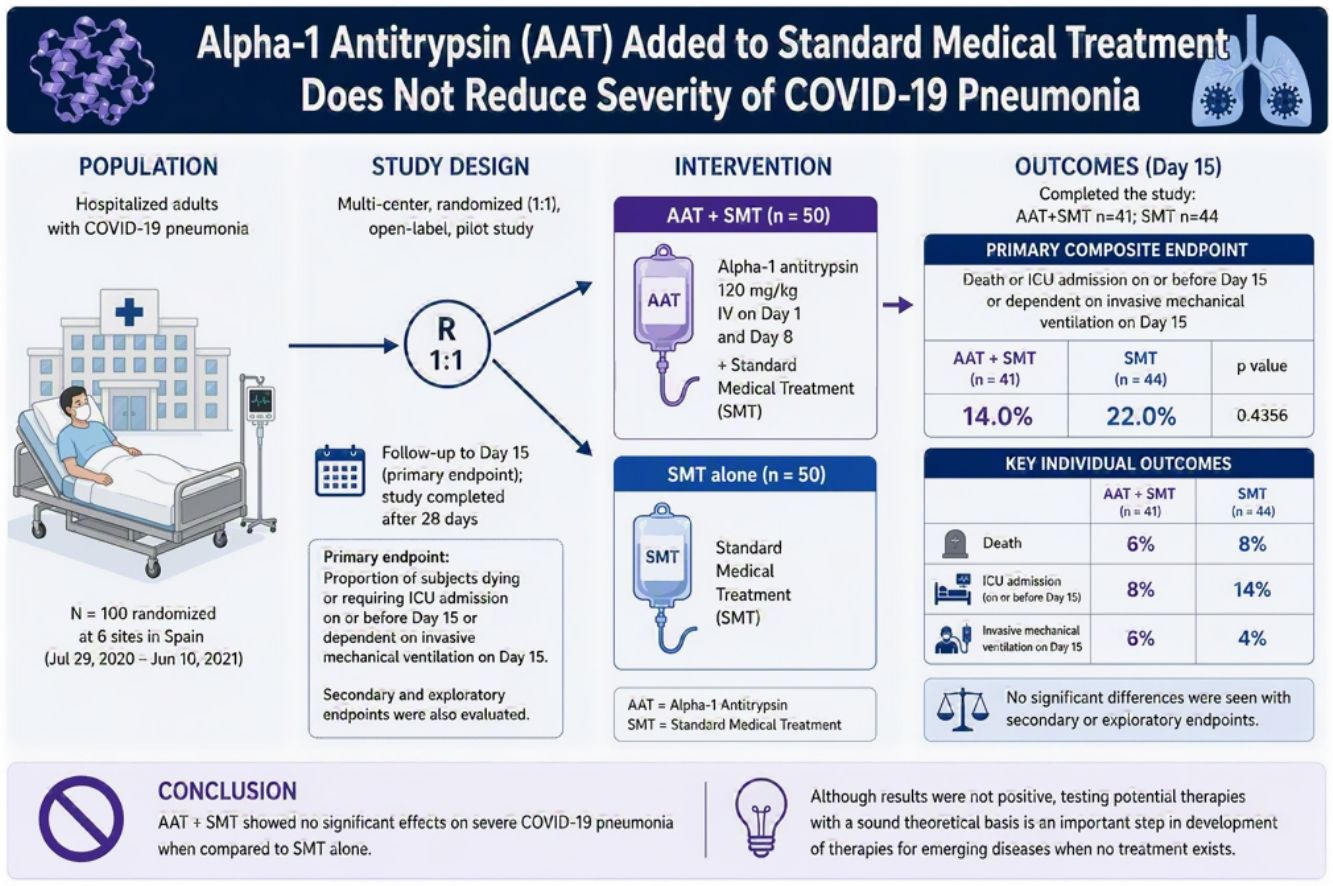
ResultsOf 100 patients randomized, 85 completed the study (AAT+SMT: n=41; SMT: n=44). Demographically the groups were similar. No significant difference was observed between the treatment groups in the composite primary endpoint: 14.0% AAT+SMT versus 22% SMT (p=0.4356) nor for death (6% versus 8%); ICU admission (8% versus 14%); requiring invasive mechanical ventilation (6% versus 4%), respectively. No significant differences were seen with secondary or exploratory endpoints.
ConclusionsAAT+SMT showed no significant effects on severe COVID-19 pneumonia when compared to SMT alone. Although results were not positive, testing potential therapies with a sound theoretical basis is an important step in development of therapies for emerging diseases when no treatment exists.

Coronavirus disease (COVID-19), caused by severe acute respiratory syndrome coronavirus-2 (SARS-CoV-2), has resulted in >770 million diagnosed infections with >7.1 million deaths as of March 2026 [1]. Although most patients have mild symptoms, many may require hospitalization, oxygen support, and admission to intensive care unit (ICU) [2]. Patients present with elevated levels of proinflammatory cytokines which can produce immune-mediated damage to lungs, disseminated intravascular coagulation, acute respiratory disease syndrome (ARDS) and hypoxemia [3,4]. Severe manifestations also include sepsis, septic shock, multiorgan failure, acute kidney injury, cardiac injury, and even death [5].
Increased circulating levels of the pro-inflammatory cytokines: interleukin (IL)-6, IL-10, IL-2R, IL-1β, IL-4, IL-8 and IL-17 are risk factors for severe COVID-19, poor outcomes and mortality [6]. It was feasible that antagonizing these proinflammatory cytokines might reduce severity and mortality of COVID-19. At the time of conception and study conduct (29 Jul 2020–10 Jun 2021), there were no treatments for COVID-19 with established efficacy that could impact the pandemic.
Alpha-1 antitrypsin (AAT) is the major serine protease inhibitor, primarily synthesized in the liver, which inhibits several proteases including neutrophil elastase, cathepsin G, and proteinase 3 [7]. AAT has anti-inflammatory, antiviral, and immunomodulatory properties [8,9]. AAT inhibits the production and activity of key pro-inflammatory cytokines such as IL-6, IL-8, IL-1β, tumor necrosis factor-α (TNF-α), B-cell-activating factor and IL-32, while promoting anti-inflammatory mediators (IL-10, IL-1RA and transforming growth factor-β) [10–12]. Increased IL-6 was associated with COVID-19 severity [13–15] and a high IL-6/AAT ratio was associated with severe disease and potentially reflective of the clinical trajectory of hospitalized patients with severe COVID-19 [4].
At the cellular level, SARS-Cov-2 relies on host factors, including transmembrane protease serine 2 (TMPRSS2) and angiotensin-converting enzyme 2 (ACE2) to infect target cells [16]. It was thought that antiviral effects of AAT could be mediated through prevention of SARS-CoV-2 cell entry and binding of the virus to ACE2 by inhibiting TMPRSS2 and other extracellular proteases [17,18]. AAT also inhibits ADAM17, a cell surface receptor for SARS-CoV2 [9,19]. These AAT activities were considered possible mechanisms that might ameliorate severe COVID-19, and serine proteases, such as AAT, might be effective in limiting dissemination of SARS-CoV-2 by affecting the surface of the host cells.
Hospitalized patients with severe COVID-19 present lower AAT levels compared with patients hospitalized with other types of pneumonia [20]. Several studies have suggested an association between AAT deficiency and increased COVID-19 severity, hospitalization stay and mortality [21], while others do not [22]. In addition, patients with AAT deficiency or low plasma AAT levels appeared to have a higher risk of severe COVID-19 [23].
AAT supplementation might be a beneficial therapeutic option in severe COVID-19 illness and there was no established treatment at the time of trial conceptualization. High doses of AAT administered to patients hospitalized with COVID-19 could decrease morbidity, mortality and attenuate the deleterious effects of cytokine release, the hyperinflammatory component of COVID-19. The aim was to evaluate whether high doses of intravenous AAT administered to patients hospitalized with COVID-19 pneumonia could reduce their symptoms and improve outcomes by leveraging the immunomodulatory, antiviral, and anti-inflammatory effects of AAT.
Materials and methodsStudy designThis prospective, multicenter, randomized, open-label, pilot study was conducted to determine whether AAT (Prolastin, Grifols, Barcelona, Spain) plus standard medical treatment (SMT) could reduce (compared to SMT alone) the proportion of hospitalized patients with COVID-19 dying or requiring ICU admission on or before day 15 or who were dependent on invasive mechanical ventilation on day 15. The study was conducted between July 29, 2020, and June 10, 2021, during the early stages of the COVID-19 outbreak at six Spanish investigational sites.
The study was carried out in conformance with European and local regulations, Good Clinical Practices, and the Declaration of Helsinki. The protocol and informed consent form were reviewed and approved by ethics committee of each participating center. To minimize infection risk, oral informed consent was obtained from each subject before any study-specific procedure took place and was documented in the subject's medical history. Subsequently, the subject's written informed consent was obtained. This trial was registered in the EudraCT Database #2020-001953-36 (clinicaltrialsregister.eu/eudract.ema.europa.eu) and at clinicaltrials.gov (NCT04495101).
PatientsEligible patients were male or female, ≥18 years of age hospitalized for treatment of COVID-19. Patients must have been screened within 48h of hospital admission and have laboratory-confirmed SARS-CoV-2 infection (as determined by qualitative RT-PCR, or other commercial assay) during the current hospital admission prior to randomization. Eligible patients also had COVID-19 signs or symptoms of any duration, including both of the following: radiographic infiltrates by imaging (chest X-ray, computed tomography (CT) scan, etc.) and/or clinical assessment (evidence of rales/crackles on exam) with SpO2<94% on room air and any of the following related to COVID-19: ferritin>400 ng/mL, lactate dehydrogenase (LDH)>300U/L, D-dimers>reference range, or CRP>40mg/L. Randomization and exclusion criteria are described in Supplementary Material.
Study interventionPatients were randomized (1:1) to receive SMT or intravenous AAT+SMT at 120mg/kg body weight on day 1, and a second dose on day 8 (optional if the patient had been discharged). The infusion rate depended on the subject's condition and the need to avoid fluid overload. High doses of AAT (i.e., 120mg/kg body weight) were commensurate with prior clinical experience [24].
SMT was provided to all subjects with daily assessments while hospitalized. The follow up period lasted from day 2 through day 29. All subjects were monitored daily through day 10, if hospitalized. After day 6, if subjects had been discharged, evaluations on days 8, 15, and 29 were required. Medical decisions regarding ICU admission and mechanical ventilation were made based on the subject's clinical status and standard of care by the clinical team blinded to the treatment assignment. On day 60, an additional assessment of the vital status (living or deceased), any hospital re-admissions or serious adverse events (SAEs) was conducted.
Study outcomesThe primary efficacy outcome was the proportion of subjects dying or requiring ICU admission on or before day 15 or dependency on invasive mechanical ventilation on day 15. Predetermined subgroup analyses of the primary efficacy endpoint by baseline characteristics such as age and sex were also performed.
Secondary efficacy outcomes were the clinical severity, determined by the change in the National Early Warning Score (NEWS) from baseline through day 29 [25]; time to clinical response determined by NEWS≤2 maintained for 24h; duration of hospitalization, ICU stay, oxygen use, and mechanical ventilation; clinical status, determined by absolute value and mean change from baseline through day 29 in the 7-point ordinal scale (1=death; 2=hospitalized, on invasive mechanical ventilation or extracorporeal membrane oxygenation, 3=hospitalized, on non-invasive ventilation or high flow oxygen devices, 4=hospitalized, requiring supplemental oxygen, 5=hospitalized, not requiring supplemental oxygen, 6=not hospitalized, limitation on activities, 7=not hospitalized, no limitations on activities [26]. In addition, percentage of subjects in each severity category of the 7-point ordinal scale at Day 15 and Day 29; time to sustained normalization of temperature and proportion of subjects with normalization of fever at all time points; number of subjects who developed ARDS; time to clinical progression, mechanical ventilation, or ICU admission through Day 29; and mortality through day 29 were also determined.
Safety of AAT in patients with COVID-19 was assessed by evaluating the incidence of treatment-emergent adverse events (TEAEs), severe TEAEs (Grades 3 and 4), potentially related severe TEAEs, the cumulative incidence of all TEAEs, and potentially related severe TEAEs through day 29. The development of COVID-19 symptoms during the clinical study should not have been recorded as individual TEAEs, unless evidence suggested a causal relationship between AAT and the TEAE. Additional assessments, exploratory endpoints, sample size and statistical analysis are summarized in Supplementary Material.
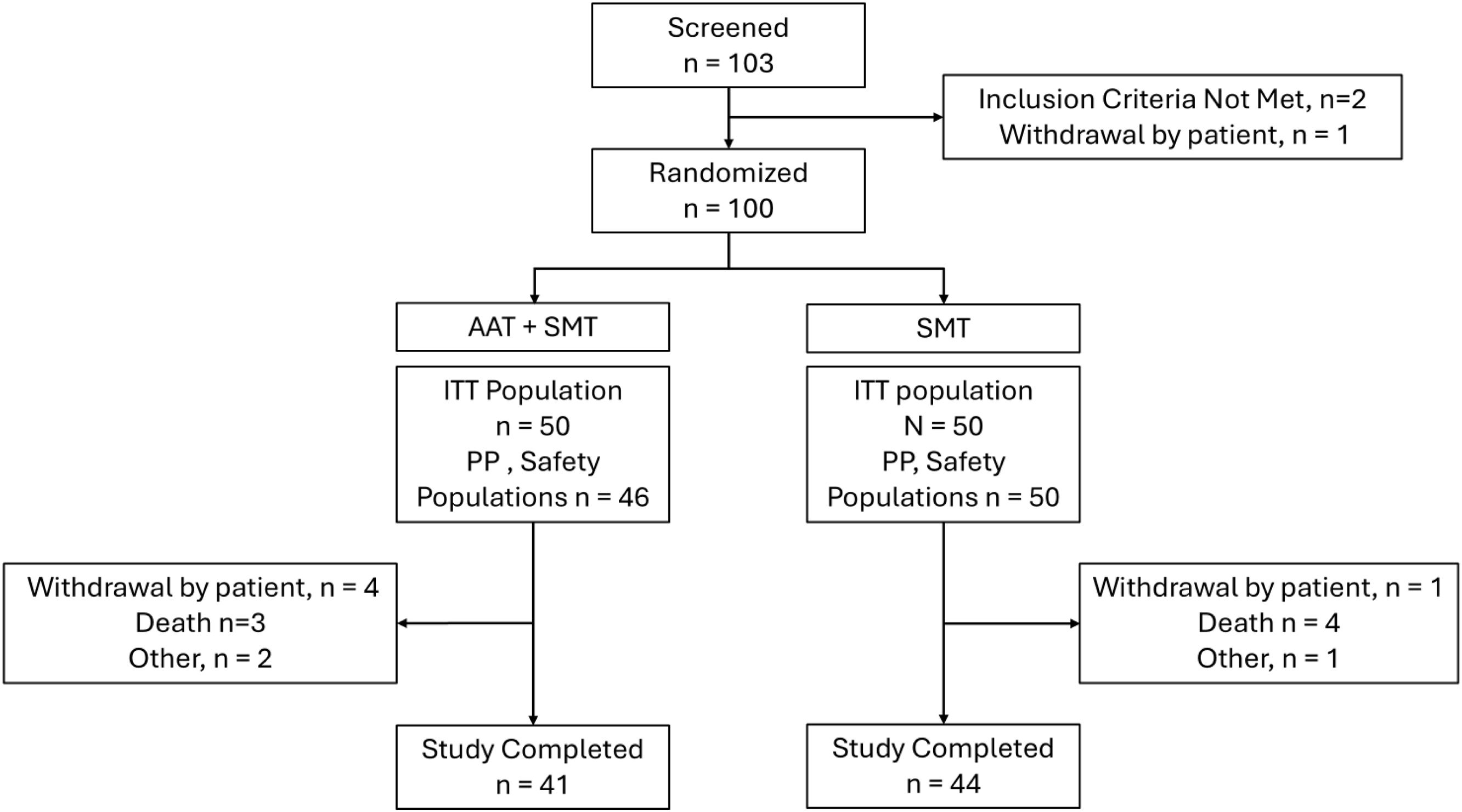
ResultsStudy patientsOf 103 patients screened, 100 were randomized (intent to treat (ITT) population) (Fig. 1). Eighty-five (85%) patients completed the study: 82% in the AAT+SMT group and 88% in the SMT group. Fifteen subjects were terminated from the study early due to withdrawal of consent (n=5), death (n=7), and other reasons (n=3) including lack of study drug, transfer to another facility, and refusal to return for day 29 assessment. Four patients did not receive any AAT and were excluded from the PP and safety populations.
Baseline patient characteristics
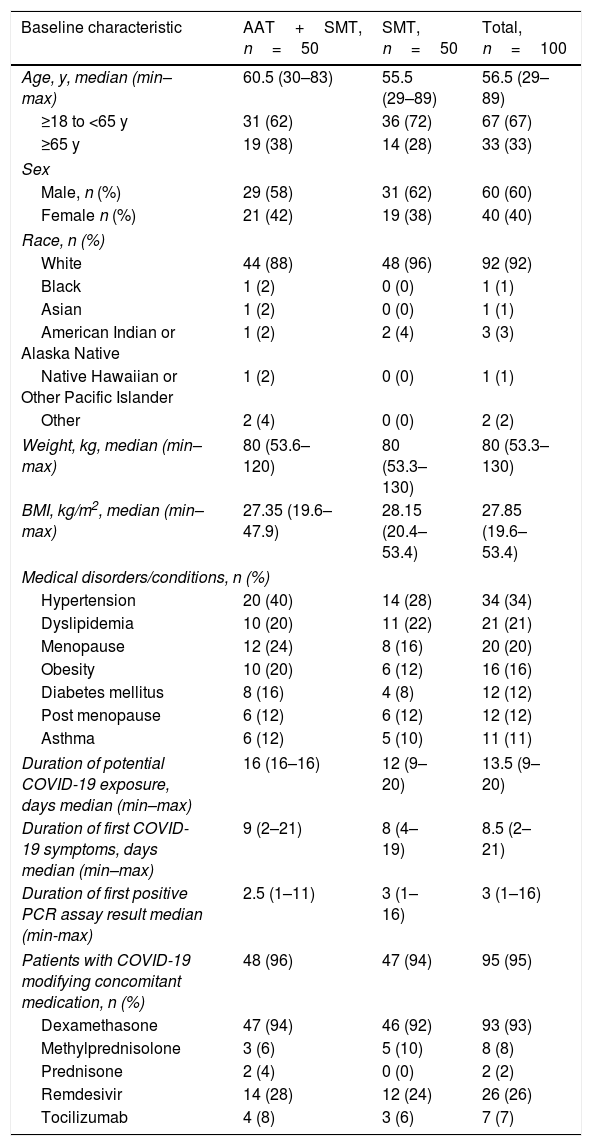
Demographics and baseline characteristics were well balanced, and no major differences were observed between both groups (Table 1). The mean (SD) duration of first symptoms was 9.1 (3.75) days before randomization and the first positive result for SARS-CoV-2 was available 3.8 (2.95) days prior to randomization. The most common pre-existing conditions were hypertension, dyslipidemia, menopause, and obesity. COVID-19-modifying concomitant medications during the study included dexamethasone and/or other systemic corticosteroids in almost all patients, remdesivir, and tocilizumab in a minority of subjects.
Demographics and baseline characteristics of the intention-to-treat population, n=100.
| Baseline characteristic | AAT+SMT, n=50 | SMT, n=50 | Total, n=100 |
|---|---|---|---|
| Age, y, median (min–max) | 60.5 (30–83) | 55.5 (29–89) | 56.5 (29–89) |
| ≥18 to <65 y | 31 (62) | 36 (72) | 67 (67) |
| ≥65 y | 19 (38) | 14 (28) | 33 (33) |
| Sex | |||
| Male, n (%) | 29 (58) | 31 (62) | 60 (60) |
| Female n (%) | 21 (42) | 19 (38) | 40 (40) |
| Race, n (%) | |||
| White | 44 (88) | 48 (96) | 92 (92) |
| Black | 1 (2) | 0 (0) | 1 (1) |
| Asian | 1 (2) | 0 (0) | 1 (1) |
| American Indian or Alaska Native | 1 (2) | 2 (4) | 3 (3) |
| Native Hawaiian or Other Pacific Islander | 1 (2) | 0 (0) | 1 (1) |
| Other | 2 (4) | 0 (0) | 2 (2) |
| Weight, kg, median (min–max) | 80 (53.6–120) | 80 (53.3–130) | 80 (53.3–130) |
| BMI, kg/m2, median (min–max) | 27.35 (19.6–47.9) | 28.15 (20.4–53.4) | 27.85 (19.6–53.4) |
| Medical disorders/conditions, n (%) | |||
| Hypertension | 20 (40) | 14 (28) | 34 (34) |
| Dyslipidemia | 10 (20) | 11 (22) | 21 (21) |
| Menopause | 12 (24) | 8 (16) | 20 (20) |
| Obesity | 10 (20) | 6 (12) | 16 (16) |
| Diabetes mellitus | 8 (16) | 4 (8) | 12 (12) |
| Post menopause | 6 (12) | 6 (12) | 12 (12) |
| Asthma | 6 (12) | 5 (10) | 11 (11) |
| Duration of potential COVID-19 exposure, days median (min–max) | 16 (16–16) | 12 (9–20) | 13.5 (9–20) |
| Duration of first COVID-19 symptoms, days median (min–max) | 9 (2–21) | 8 (4–19) | 8.5 (2–21) |
| Duration of first positive PCR assay result median (min-max) | 2.5 (1–11) | 3 (1–16) | 3 (1–16) |
| Patients with COVID-19 modifying concomitant medication, n (%) | 48 (96) | 47 (94) | 95 (95) |
| Dexamethasone | 47 (94) | 46 (92) | 93 (93) |
| Methylprednisolone | 3 (6) | 5 (10) | 8 (8) |
| Prednisone | 2 (4) | 0 (0) | 2 (2) |
| Remdesivir | 14 (28) | 12 (24) | 26 (26) |
| Tocilizumab | 4 (8) | 3 (6) | 7 (7) |
AAT=alpha1-antitrypsin; SMT=standard medical treatment; BMI=body mass index.
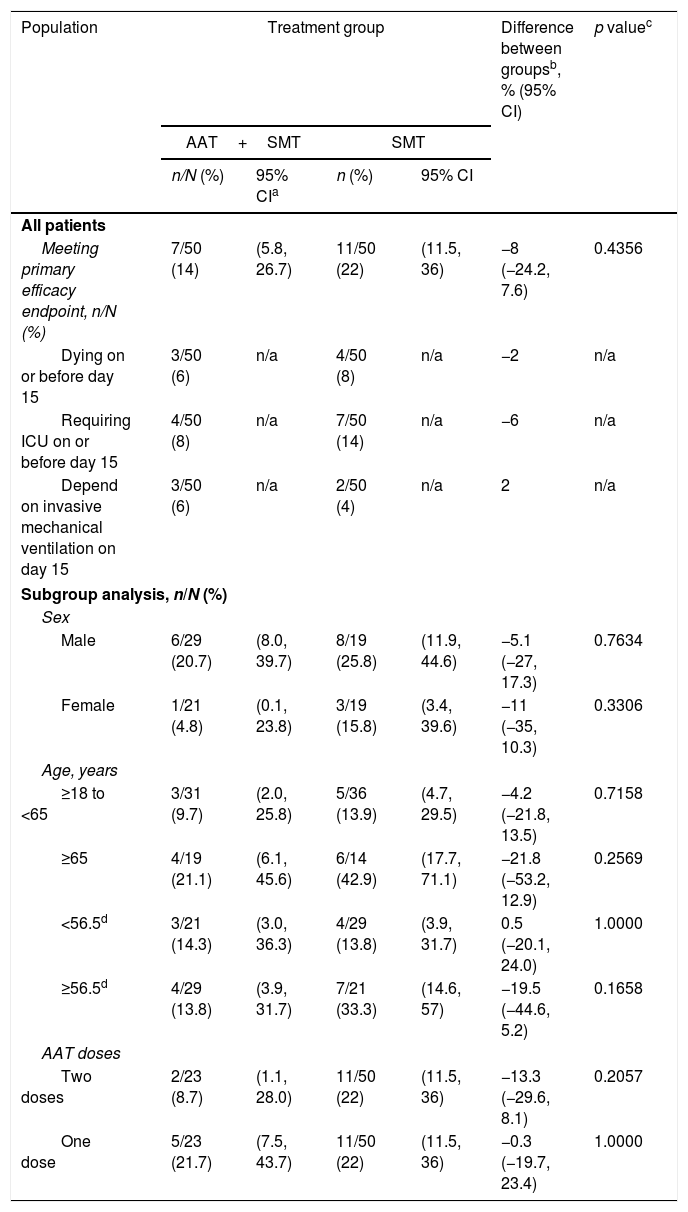
The number and percentage of patients dying or admitted to the ICU in the first 15 days or requiring mechanical ventilation on day 15 (the primary endpoint) are shown in Table 2. There were no substantial differences between the groups for the individual measures in the composite endpoint. The difference between the two groups in the composite primary endpoint was −8.0% and not statistically significant (p=0.4356). Similar results were observed in the PP population (−6.8% difference; p=0.4422). Pre-specified subgroup analysis based on age, sex, and doses of AAT revealed no significant differences in the primary efficacy outcome in any of the stratified subgroups (Table 2).
Primary efficacy endpoint in the study population.
| Population | Treatment group | Difference between groupsb, % (95% CI) | p valuec | |||
|---|---|---|---|---|---|---|
| AAT+SMT | SMT | |||||
| n/N (%) | 95% CIa | n (%) | 95% CI | |||
| All patients | ||||||
| Meeting primary efficacy endpoint, n/N (%) | 7/50 (14) | (5.8, 26.7) | 11/50 (22) | (11.5, 36) | −8 (−24.2, 7.6) | 0.4356 |
| Dying on or before day 15 | 3/50 (6) | n/a | 4/50 (8) | n/a | −2 | n/a |
| Requiring ICU on or before day 15 | 4/50 (8) | n/a | 7/50 (14) | n/a | −6 | n/a |
| Depend on invasive mechanical ventilation on day 15 | 3/50 (6) | n/a | 2/50 (4) | n/a | 2 | n/a |
| Subgroup analysis, n/N (%) | ||||||
| Sex | ||||||
| Male | 6/29 (20.7) | (8.0, 39.7) | 8/19 (25.8) | (11.9, 44.6) | −5.1 (−27, 17.3) | 0.7634 |
| Female | 1/21 (4.8) | (0.1, 23.8) | 3/19 (15.8) | (3.4, 39.6) | −11 (−35, 10.3) | 0.3306 |
| Age, years | ||||||
| ≥18 to <65 | 3/31 (9.7) | (2.0, 25.8) | 5/36 (13.9) | (4.7, 29.5) | −4.2 (−21.8, 13.5) | 0.7158 |
| ≥65 | 4/19 (21.1) | (6.1, 45.6) | 6/14 (42.9) | (17.7, 71.1) | −21.8 (−53.2, 12.9) | 0.2569 |
| <56.5d | 3/21 (14.3) | (3.0, 36.3) | 4/29 (13.8) | (3.9, 31.7) | 0.5 (−20.1, 24.0) | 1.0000 |
| ≥56.5d | 4/29 (13.8) | (3.9, 31.7) | 7/21 (33.3) | (14.6, 57) | −19.5 (−44.6, 5.2) | 0.1658 |
| AAT doses | ||||||
| Two doses | 2/23 (8.7) | (1.1, 28.0) | 11/50 (22) | (11.5, 36) | −13.3 (−29.6, 8.1) | 0.2057 |
| One dose | 5/23 (21.7) | (7.5, 43.7) | 11/50 (22) | (11.5, 36) | −0.3 (−19.7, 23.4) | 1.0000 |
Values are expressed as n/N (%). Percentages were based on the total number of ITT subjects in each treatment group and each subgroup
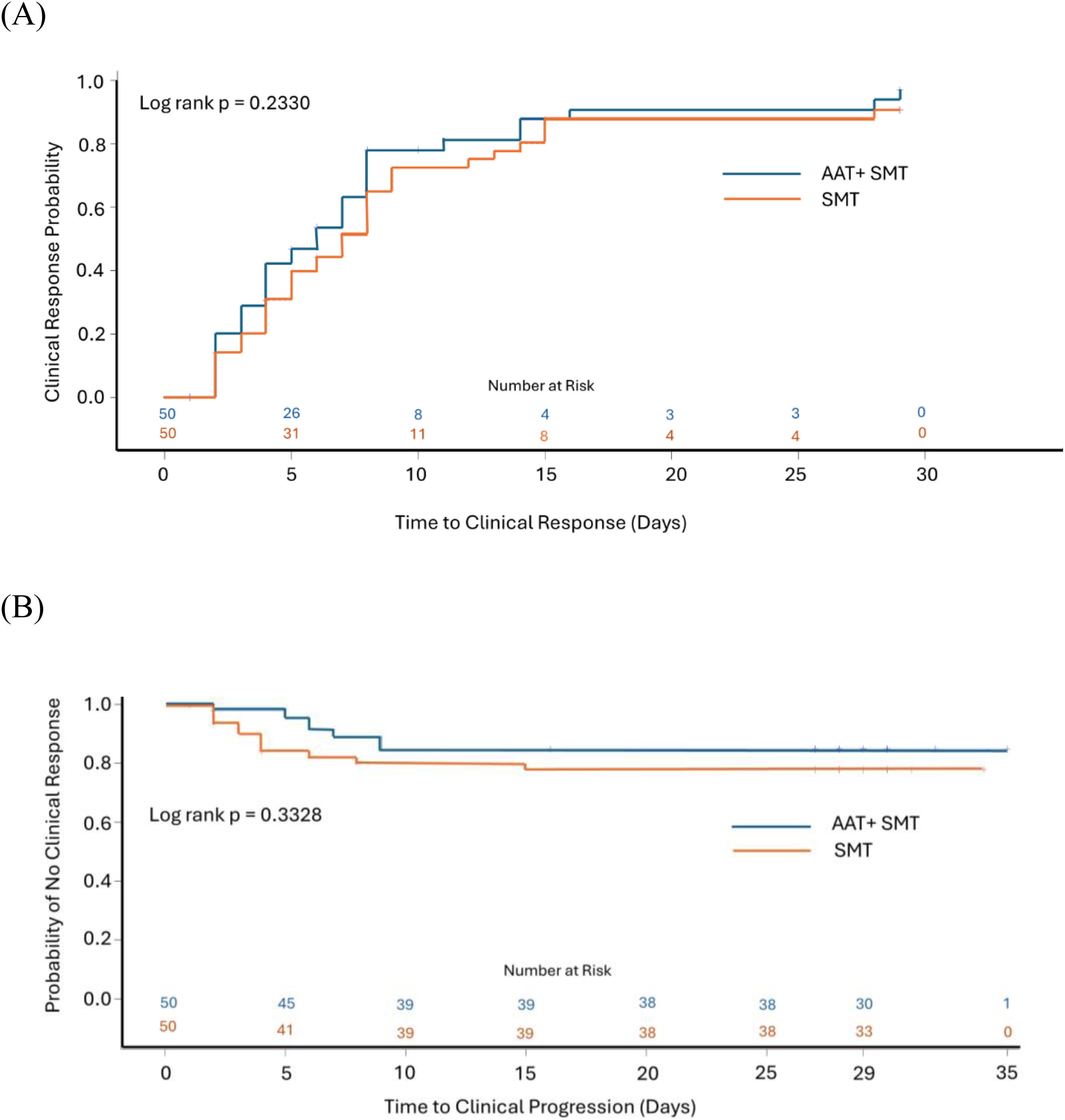
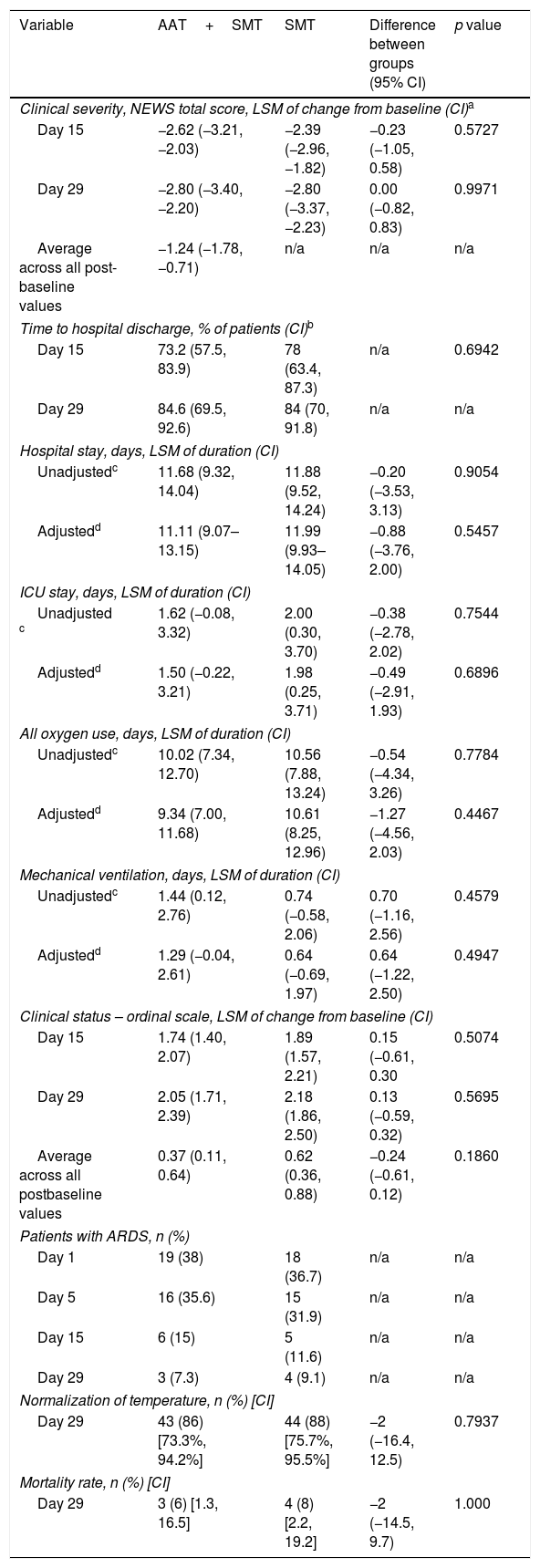
There were no statistically significant differences between treatment groups in the following secondary efficacy endpoints (Table 3): (1) change from baseline in NEWS total score at day 15 or at day 29 (Table 3); time to clinical response (Fig. 2); (3) percentage of patients discharged from the hospital; number of days in the hospital, duration of ICU stay, number of days on oxygen use, number of days on mechanical ventilation (Table 3).
Secondary efficacy endpoint in the study population.
| Variable | AAT+SMT | SMT | Difference between groups (95% CI) | p value |
|---|---|---|---|---|
| Clinical severity, NEWS total score, LSM of change from baseline (CI)a | ||||
| Day 15 | −2.62 (−3.21, −2.03) | −2.39 (−2.96, −1.82) | −0.23 (−1.05, 0.58) | 0.5727 |
| Day 29 | −2.80 (−3.40, −2.20) | −2.80 (−3.37, −2.23) | 0.00 (−0.82, 0.83) | 0.9971 |
| Average across all post-baseline values | −1.24 (−1.78, −0.71) | n/a | n/a | n/a |
| Time to hospital discharge, % of patients (CI)b | ||||
| Day 15 | 73.2 (57.5, 83.9) | 78 (63.4, 87.3) | n/a | 0.6942 |
| Day 29 | 84.6 (69.5, 92.6) | 84 (70, 91.8) | n/a | n/a |
| Hospital stay, days, LSM of duration (CI) | ||||
| Unadjustedc | 11.68 (9.32, 14.04) | 11.88 (9.52, 14.24) | −0.20 (−3.53, 3.13) | 0.9054 |
| Adjustedd | 11.11 (9.07–13.15) | 11.99 (9.93–14.05) | −0.88 (−3.76, 2.00) | 0.5457 |
| ICU stay, days, LSM of duration (CI) | ||||
| Unadjusted c | 1.62 (−0.08, 3.32) | 2.00 (0.30, 3.70) | −0.38 (−2.78, 2.02) | 0.7544 |
| Adjustedd | 1.50 (−0.22, 3.21) | 1.98 (0.25, 3.71) | −0.49 (−2.91, 1.93) | 0.6896 |
| All oxygen use, days, LSM of duration (CI) | ||||
| Unadjustedc | 10.02 (7.34, 12.70) | 10.56 (7.88, 13.24) | −0.54 (−4.34, 3.26) | 0.7784 |
| Adjustedd | 9.34 (7.00, 11.68) | 10.61 (8.25, 12.96) | −1.27 (−4.56, 2.03) | 0.4467 |
| Mechanical ventilation, days, LSM of duration (CI) | ||||
| Unadjustedc | 1.44 (0.12, 2.76) | 0.74 (−0.58, 2.06) | 0.70 (−1.16, 2.56) | 0.4579 |
| Adjustedd | 1.29 (−0.04, 2.61) | 0.64 (−0.69, 1.97) | 0.64 (−1.22, 2.50) | 0.4947 |
| Clinical status – ordinal scale, LSM of change from baseline (CI) | ||||
| Day 15 | 1.74 (1.40, 2.07) | 1.89 (1.57, 2.21) | 0.15 (−0.61, 0.30 | 0.5074 |
| Day 29 | 2.05 (1.71, 2.39) | 2.18 (1.86, 2.50) | 0.13 (−0.59, 0.32) | 0.5695 |
| Average across all postbaseline values | 0.37 (0.11, 0.64) | 0.62 (0.36, 0.88) | −0.24 (−0.61, 0.12) | 0.1860 |
| Patients with ARDS, n (%) | ||||
| Day 1 | 19 (38) | 18 (36.7) | n/a | n/a |
| Day 5 | 16 (35.6) | 15 (31.9) | n/a | n/a |
| Day 15 | 6 (15) | 5 (11.6) | n/a | n/a |
| Day 29 | 3 (7.3) | 4 (9.1) | n/a | n/a |
| Normalization of temperature, n (%) [CI] | ||||
| Day 29 | 43 (86) [73.3%, 94.2%] | 44 (88) [75.7%, 95.5%] | −2 (−16.4, 12.5) | 0.7937 |
| Mortality rate, n (%) [CI] | ||||
| Day 29 | 3 (6) [1.3, 16.5] | 4 (8) [2.2, 19.2] | −2 (−14.5, 9.7) | 1.000 |
95% CI for difference in LSM between treatment groups and the associated p-value were calculated using restricted maximum likelihood with the Kenward–Roger method for calculating the denominator degrees of freedom.
95% CI for difference in LSM between groups and the p-value are calculated using an ANOVA model, including the number of days on hospital stay, ICU stay, oxygen use or mechanical ventilation as a dependent variable and treatment group as a fixed effect.
95% CI for difference in LSM between groups and the p-value are calculated using an ANCOVA model adjusting for baseline characteristics including age and sex.
Abbreviations: AAT=alpha1-antitrypsin; SMT=standard medical treatment; ARDS=acute respiratory distress syndrome; LSM=least square mean; CI=confidence interval.

Kaplan–Meier analysis of the (A) clinical response probability, defined as the NEWS score ≤2 maintained for 24h through the study period and (B) clinical progression probability in the ITT population, defined as death, start of mechanical ventilation, or ICU admission through the study period. AAT=alpha-1 antitrypsin; SMT=standard medical treatment.
Change from baseline (least squares mean (LSM)) in ordinal scale of clinical status was not statistically significant between treatment groups at day 15 and Day 29 visits when using a linear mixed-effects model for repeated measures (Table 3). Statistical significance was not noted for the average across all post-baseline values. When testing with a proportional odds model adjusting for age and sex, treatment groups were not statistically significantly different at day 15 and at day 29. Statistical significance was noted for age (day 15, p<0.0001 and day 29, p<0.0001) but not sex.
No significant difference was observed in the proportion of patients who achieved sustained normalization of temperature at any time point through Day 29 (Table 3). Also, the proportion of subjects with ARDS were similar between the groups and decreased over the course of the treatment. No statistically significant differences were detected between treatment groups either in proportion of subjects without clinical progression (Fig. 2B) or in mortality rate (Table 2).
Regarding exploratory endpoints, no notable changes from baseline in quantitative anti-SARS-CoV-2 IgG antibodies were observed (Supplementary Table S1). Overall, the number of subjects with hyperinflammation decreased during the study period. The proportion of patients fulfilling the definition for hyperinflammation at baseline was balanced between arms (43.8%, AAT+SMT and 46.0%, SMT; Supplementary Table S2). Throughout the study decreasing but commensurate proportions of patients fulfilled hyperinflammation endpoint criteria (day 5, 17.8% and 23.3%; day 15: 10.5% and 10%; day 29, 5.9% and 2.6%, for AAT+SMT and SMT, respectively). The change from baseline in levels of IL-2, IL-6, Il-8, IL-10, IL-1beta, IFN-gamma and TNF-a levels was similar between treatment groups through the study period (Supplementary Table S1). No use of immunosuppressants or interleukin antagonists for treatment of serious evolving cytokine storm was reported.
Safety assessmentOf 46 subjects dosed, 23 subjects received one AAT infusion, and 23 subjects received two. For all patients, the full dose prepared was administered. All patients were treatment compliant.
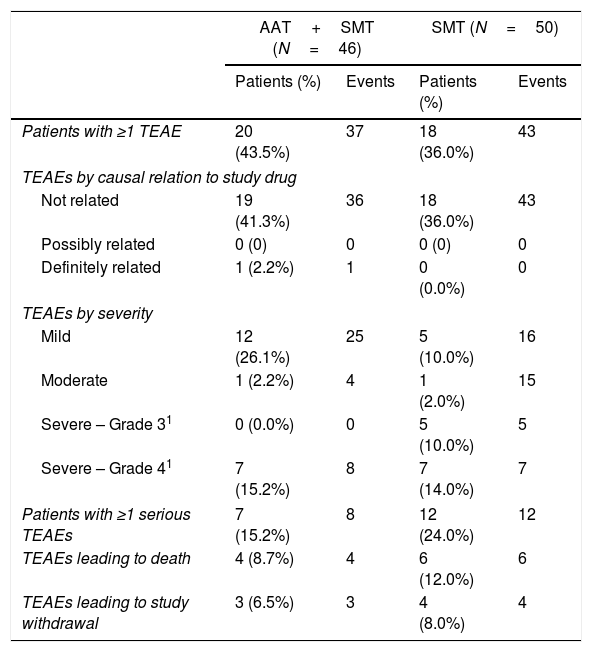
The number and percentage of patients with TEAEs was similar between the treatment groups (Table 4). Most were reported as mild. All serious TEAEs were considered not related to study drug administration. All fatalities observed in the study were from COVID-19 pneumonia and none were considered related to study drug administration. The percentage of patients withdrawing from the study due to TEAEs was similar between the treatment groups.
Safety endpoints measured as treatment-emergent adverse events (TEAEs).
| AAT+SMT (N=46) | SMT (N=50) | |||
|---|---|---|---|---|
| Patients (%) | Events | Patients (%) | Events | |
| Patients with ≥1 TEAE | 20 (43.5%) | 37 | 18 (36.0%) | 43 |
| TEAEs by causal relation to study drug | ||||
| Not related | 19 (41.3%) | 36 | 18 (36.0%) | 43 |
| Possibly related | 0 (0) | 0 | 0 (0) | 0 |
| Definitely related | 1 (2.2%) | 1 | 0 (0.0%) | 0 |
| TEAEs by severity | ||||
| Mild | 12 (26.1%) | 25 | 5 (10.0%) | 16 |
| Moderate | 1 (2.2%) | 4 | 1 (2.0%) | 15 |
| Severe – Grade 31 | 0 (0.0%) | 0 | 5 (10.0%) | 5 |
| Severe – Grade 41 | 7 (15.2%) | 8 | 7 (14.0%) | 7 |
| Patients with ≥1 serious TEAEs | 7 (15.2%) | 8 | 12 (24.0%) | 12 |
| TEAEs leading to death | 4 (8.7%) | 4 | 6 (12.0%) | 6 |
| TEAEs leading to study withdrawal | 3 (6.5%) | 3 | 4 (8.0%) | 4 |
Severe TEAEs included Grade 3 and 4 AEs. Grade 3 AEs were those events that interrupted usual activities of daily living, or significantly affected clinical status, or may have required intensive therapeutic intervention. Grade 4 AEs were defined as events that were potentially life threatening. AAT=alpha1-antitrypsin; SMT=standard medical treatment; TEAE=treatment emergent adverse event.
Pneumonia was the only TEAE reported >5% in either treatment arm (Supplementary Table S3). Most common TEAEs were COVID-19 pneumonia, ARDS, hyperglycemia, and constipation. TEAEs related to treatment infusion included injection site pain, puncture site pain and erythema, and vasovagal syndrome. A list of TEAEs reported by system organ class and preferred term is provided in Supplementary Table S3.
DiscussionWhen this study was conducted, there were no approved prophylactic, post-exposure, or therapeutic treatments for COVID-19. Due to the anti-inflammatory properties of AAT and the role of cytokines in severe COVID-19, this study was designed to assess effects of exogenous AAT administration on the clinical course of hospitalized patients. AAT inhibits production and activity of several key pro-inflammatory cytokines, such asIL-1, IL-6, IL-8 and TNF-α [8,9,12], while preserving production of the anti-inflammatory cytokine IL-10 [11].
High levels of proinflammatory cytokines are expressed in SARS-CoV-infected ACE2+ cells, but not in uninfected cells [27]. Proinflammatory cytokine antagonists may reduce the severity and mortality of SARS and potentially reduce other pathogenic human coronaviruses [27–29]. Therefore, it was considered that the modulatory and anti-inflammatory effects of AAT could attenuate deleterious effects of cytokine release syndrome engendered in COVID-19. Indeed, AAT supplementation decreased plasma concentrations of the pro-inflammatory cytokine IL-6 in patients with moderate to severe ARDS secondary to COVID-19 [30]. However, the findings of the current study do not support this premise and showed was no impact of AAT on clinical outcome measures.
One reason AAT therapy may not have been effective in this study could be the loss of function with AAT in COVID-19 patients. A recent study of plasma and bronchoalveolar lavage fluid from COVID-19 patients found oxidation of AAT in COVID-19 patients resulted in functional impairment of AAT through structural alterations that altered binding to neutrophil elastase [31]. In addition, the possibility exists that AAT alone may be insufficient to impact the clinical course of COVID-19. AAT was used in combination with other medications in some patients in this study (systemic corticosteroids, remdesivir, and tocilizumab) which may have obscured the effects of AAT alone, especially if the effect were not substantial. However, the consideration at inception was that AAT in combination with other medications could potentially contribute additive or synergistic effects.
It is also possible that the heterogeneous nature of the patient population in this study may have masked a potential benefit in a sub-population of patients. Individuals with early deterioration of respiratory function, high levels of inflammatory mediators or severe AATD might preferentially benefit from treatment with AAT. However, a recent retrospective study in Sweden found that the majority of severe AATD patients in their national registry who contracted COVID-19 had mild disease suggesting that AATD alone may not be a predisposing factor for severe COVID-19 [32].
The strengths of this study include that it was a controlled clinical trial. When the SARS-CoV-2 virus first emerged, several proposed therapies emerged based on anecdotal evidence and diverted attention from other more promising therapies. Controlled trials are considered the most definitive study design for evaluating novel therapies. The clinical heterogeneity of COVID-19 in critically ill patients was observed in the overall cumulative 28-day mortality in a cohort of patients admitted to ICU between Mar and April 2020, which was ranged between 23% and 53%. While this study did not confirm that AAT could reduce symptoms and improve clinical outcomes in hospitalized patients with COVID-19, it did confirm that high doses of AAT (120mg/kg) were safe and well tolerated in this cohort of patients.
Notably the overall mortality rate in this study was on the lower end of reported values and this may have been in part due to the high level of supportive care received by these patients that may have offered them an advantage not universally representative of the fatalities suffered at that time in the pandemic. The lower mortality rate seen in this study may have made distinguishing a treatment effect on mortality more difficult to determine.
In this study, mortality was 6% in the AAT+SMT group and 8% in the SMT group. These mortality rates were similar to those reported in a study of remdesivir [33]. However, two systematic reviews regarding COVID-19 fatality rates reported an 17% overall mortality rate for COVID-19 patients admitted to hospitals, with notable differences in according to the geographic area, ranged from 13% to 25% [34,35].
A limitation of the study was that almost all patients in both treatment groups received other COVID-19 specific treatments. The majority received dexamethasone or another systemic glucocorticoid and approximately 25% of patients in each arm received remdesivir. In addition, a small percentage of patients received tocilizumab. However, this could not be ethically avoided and the distribution of SMT treatments was balanced across treatment arms. An additional potential limitation was the sample size (ITT population=100) which may have been unable to detect small differences in the specified outcomes. Differences in the criteria for intensive care admission and mechanical ventilation between hospitals could have affected the primary outcome of the study. Evolution of the SARS-CoV-2 virus, standard of care for COVID-19 patients and availability of resources (e.g., intensive care beds and ventilators) may also have affected the primary outcome of the study.
Since this study was conducted effective treatments and vaccines have been approved. The advent of these treatments and evolution of the virus have changed SARS-CoV-2 from a pandemic to endemic virus. Prior to the introduction of the vaccines, mortality from COVID-19 was high. The WHO has estimated that globally over 7.1 million people have died from COVID-19 since its appearance in 2020. (1) A systematic review in 2021 found a overall mortality rate of 17.1% in hospitalized patients with COVID-19 (95% CI 12.7, 22.7; n=33) and 40.5% (95% CI 31.2; 50.6, n=7) in critically ill patients [35].
With the introduction of vaccines (mRNA, adenovirus vector and inactivated virus) hospitalizations and mortality due to COVID-19 were greatly reduced [36–39] simultaneously reducing the urgency for studies like the one described herein. Currently, vaccines remain an important component of COVID-19 prevention in immunocompromised people [40]. Current antiviral therapeutics for COVID-19 include remdesivir and nirmatrelvir/ritonavir. Nirmatrelvir/ritonavir has demonstrated the most consistent efficacy in clinical trials in the outpatient setting to treat mild-to-moderate COVID-19 [41]. If SARS-CoV-2 develops resistance to current vaccines and treatments or mutates to increased virulence, the search for new medications to treat COVID-19 may again become a public health priority.
Although AAT+SMT did not demonstrate significant effects on COVID-19 when compared to SMT. This study represents an important step in the progress of development of therapies for COVID-19. As important as the identification of medications that show early promise in treating COVID-19, it was equally important to conduct well-designed and well-executed studies that identified therapies that do not have early indications of efficacy. By quickly identifying the most promising leads, resources can be focused there, and less promising leads can be further studied, if warranted, when the need for therapies is not as urgent.
ConclusionsThis study was conducted early in the COVID-19 pandemic when no effective treatments or vaccines were available. The objective was to determine if the inhibitory effect of AAT on pro-inflammatory cytokine production (in combination with SMT) might translate into improved outcomes in hospitalized patients with COVID-19. There was no significant difference between treatment with AAT+SMT and SMT alone on the combined primary endpoint of mortality or ICU admission by day 15 of the study or dependence on mechanical ventilation on day 15. No significant effects were seen on secondary or exploratory endpoints. Although the results were not positive, well-planned, controlled trials like this can contribute to guiding research for emerging diseases like COVID-19.
Author contributionsLPM, MCR, SMB, LLA, CMR, and MM participated in investigation and writing (original draft and review/editing). EM, MT, and NA participated in conceptualization, formal analysis, and writing (original draft and review/editing). All authors approved the final version of the manuscript and have met the ICMJE qualifications for authorship.
Use of artificial intelligenceDuring the preparation of this work, the authors used Microsoft 365 Copilot for preparing the graphical abstract. The authors reviewed and edited the output as needed and take full responsibility for the content of the published article.
Funding of the researchThis study was funded by Grifols, S.A. Employees of the sponsor has participated in management of the project, analysis of the data, the writing process, and as authors in the approval of the manuscript and the decision to publish.
Conflicts of interestLPM has received speaker fees and non-committal grants from Grifols and GSK. MM has received speaker fees from AstraZeneca, Boehringer Ingelheim, Bial, Chiesi, Cipla, GlaxoSmithKline, Glenmark Pharmaceuticals, Menarini, Kamada, Takeda, Zambon, Tabuk Pharmaceuticals, CSL Behring, Specialty Therapeutics, Sanofi/Regeneron, Grifols and Novartis, consulting fees from AstraZeneca, Atriva Therapeutics, BEAM Therapeutics, GondolaBio, Chiesi, GlaxoSmithKline, CSL Behring, Ferrer, Korrobio, Menarini, Mereo Biopharma, Specialty Therapeutics, Takeda, Novartis, Novo Nordisk, Roche, Sanofi/Regeneron, Zambon, Zentiva and Grifols and research grants from Grifols. MCR has received speaker or consulting fees from AstraZeneca, Sanofi, Bial, Chiesi, CSL Behring, GlaxoSmithKline, Grifols, Menarini and Zambon, and research grants from Grifols. CMR has received speaker and consulting fees from Astra Zeneca, CSL-Behring, Chiesi, Glaxo Smith Kline, Mundipharma, Novartis, Sanofi, Mundipharma, speaker fees from Gebro, Menarini, TEVA, and grants from Astra Zeneca, Gebro, GSK and TEVA. LLA has received fees in the last 3 years for scientific advice, lecturing, and participation in clinical studies from (in alphabetical order): Adamed, Aflofarm, AstraZeneca, Bial, Chiesi, CSL Bering, Gebro, Grifols, GSK, Menarini, Sanofi. EM, MT, and NA are full-time employees of Grifols.
Michael K. James, PhD CMPP, Eugenio Rosado, PhD CMPP, and Jordi Bozzo, PhD CMPP (Grifols) are acknowledged for medical writing and editorial support in the preparation of this manuscript. The authors wish to thank all the patients who contributed to this study.
The followings are the supplementary data to this article: